


 +91-85304 14111




OUR BLOGS
Our Latest Blogs
14 Aug 2026
By Mansi Jha l Infrastructure
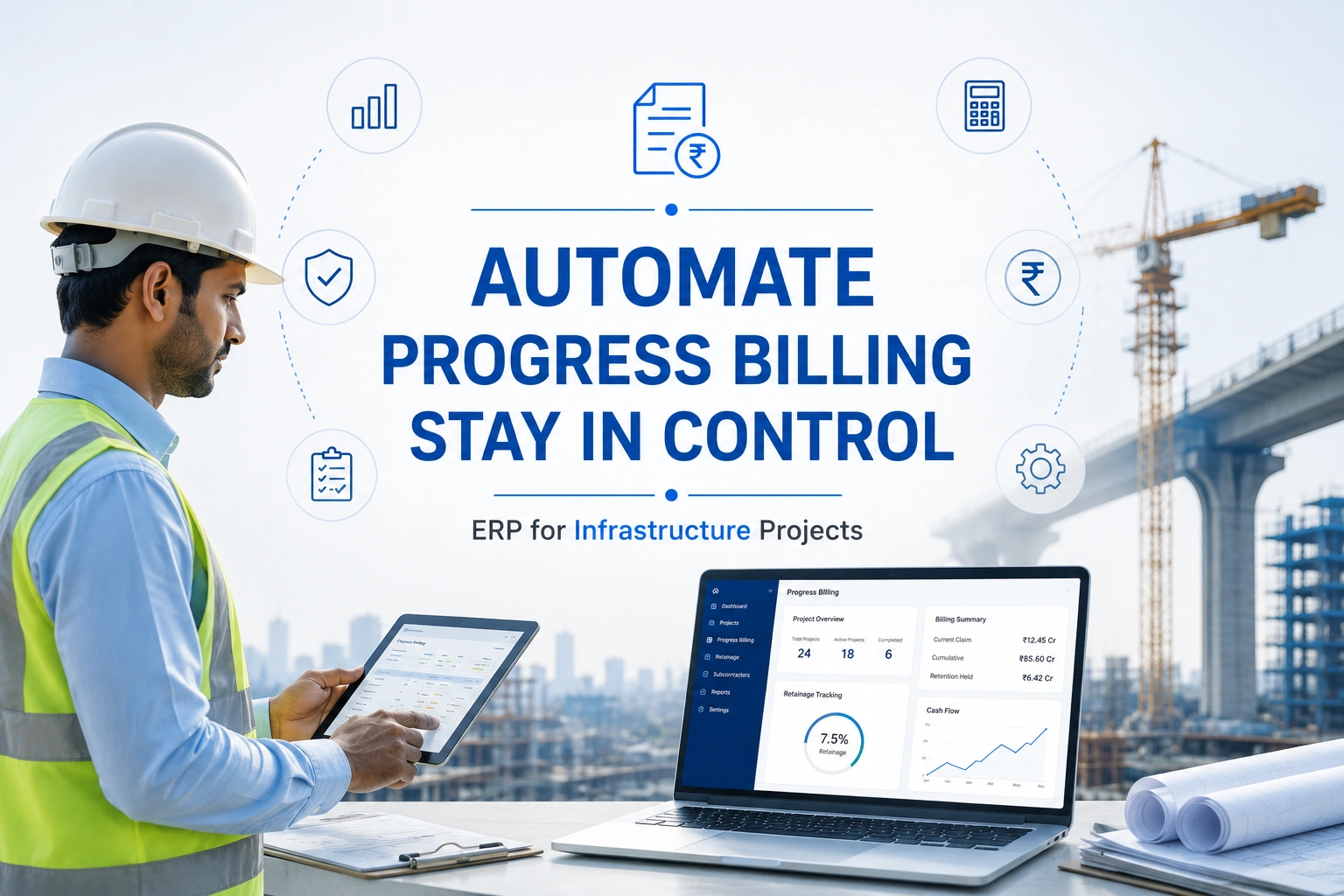
Beyond the Spreadsheet: Automating Infrastructure Progress Claims and Retainage Tracking
In large-scale civil engineering and infrastructure projects, a contractor's biggest bottleneck isn't moving dirt or pouring concrete, it's getting paid for it.
Unlike retail or standard manufacturing where goods are exchanged for fixed, upfront prices, infrastructure billing is a long, bureaucratic cycle of milestones, physical verifications, and rolling deductions. For a typical project, you are dealing with Running Account (RA) bills, variable item rates from a massive Bill of Quantities (BOQ), mobilization advances, and complex subcontractor progress claims.
To make matters more challenging, there is the issue of retainage (or retention money). Client organizations routinely withhold 5% to 10% of every invoice to ensure the project is completed to specification.
When your billing engineering team relies on manual spreadsheets to calculate these figures across multiple active sites, mistakes are inevitable. A single formula error can lead to under-billing, over-paying subcontractors, or losing track of millions in withheld retention money.
To maintain healthy project margins and steady cash flow, modern infrastructure firms are abandoning disconnected spreadsheets and moving toward integrated construction ERP software built specifically for progress payments.
Part 1: The Administrative Chaos of Manual Infrastructure Billing
Infrastructure contracts are inherently fluid. Scope changes, material price variations, and site conditions mean that what was planned in the initial tender rarely reflects what happens on the ground. When multiple change orders are floating around in email threads while work is actively being executed on site, tracking what is billable becomes an operational nightmare.
When managing these shifts manually, a construction company faces three primary administrative friction points:
1. The Disconnect Between Physical Progress and Financial Invoicing
Before an RA bill can be raised, the work must be physically measured and certified on-site. When site measurement books (MB) live on paper or isolated laptops, the back office in charge of invoicing operates blindly. This is a classic case of poor information flow between site and finance, and it results in billing delays, sometimes causing a firm to wait 40-60 days to invoice for work that has already been completed.
2. The Nightmare of Multi-Tiered Retainage Tracking
If an infrastructure firm balances five major government clients and dozens of specialized subcontractors, tracking retainage becomes dizzying. The main client holds retainage against you, while you simultaneously hold a separate percentage of retainage against your sub-contractors. Keeping tabs on when these specific milestone periods expire, and when that cash should legally be released, is virtually impossible without the kind of real-time operational visibility a centralized database provides.
3. Cumulative Deduction Discrepancies
Every progress claim requires recalculating cumulative work completed to date, deducting previous payments, accounting for material advances, and adjusting for statutory taxes like TDS and GST. A single human error in any of these line items can halt an entire payment cycle, forcing your billing team to completely restart the approval loop with the client's auditors.
Furthermore, manual processes make it incredibly difficult to reconcile material consumption against progress claims. If your spreadsheet doesn't flag that a subcontractor has pulled 120% of the allocated steel for a specific milestone but only completed 80% of the physical work, you are effectively financing their operational inefficiencies. This is exactly the kind of gap that construction inventory management software is designed to close, and it's precisely where infrastructure companies leak their highest margins without realizing it until the project is near completion.
Part 2: How Progress Payments Software Streamlines the Invoice Lifecycle
Dedicated infrastructure ERP billing platforms remove manual calculations from the equation by linking project planning data directly with accounting engines. By creating a unified digital pathway from the site engineer's mobile device to the finance head's desktop, the software eliminates the double data entry that frequently breeds human error.
Here is exactly how an integrated progress billing system handles a live construction cycle from start to finish:
1. Unified Work Breakdown Structure (WBS) Mapping
Instead of treating billing as an isolated accounting task, the software connects every line item on a bid to a specific task in your Work Breakdown Structure, the same structure that should already be tying your estimating and inventory data together. When a project manager updates the progress of a specific bridge pier or highway kilometer, the system automatically translates that physical volume into a billable monetary value based on pre-approved contract rates.
2. Digital Joint Measurement Records (JMR)
Instead of waiting weeks for client representatives and site engineers to sign off on physical measurement books, the software facilitates digital Joint Measurement Records. Site teams can upload surveyed quantities, attach geo-tagged site photographs, and log initial clearances directly into the system. This transparency reduces disputes with client auditors and slashes the time it takes to get an initial billing milestone certified.
3. Automated RA Bill and Progress Claim Generation
With all site data flowing into a centralized cloud database, generating an RA bill takes minutes instead of days. The billing engineer selects the project milestone, and the system pulls historical data to instantly populate:
- Total work executed during the current billing period.
- Cumulative work completed to date.
- Automated deductions for mobilization advances and raw materials supplied to site.
4. Precision Retainage Matrix Management
Good construction progress payments software features built-in rule engines designed to manage retainage automatically. When setting up a contract in the system, you can input the exact retention parameters:
- Automatically deduct a set percentage (e.g., 7.5%) from every progress claim up to a specific cap.
- Differentiate between client-side retention and subcontractor-side retention.
- Set automated calendar alerts for the Defect Liability Period (DLP), reminding finance teams exactly when to submit a formal request for the release of withheld retention funds.
Part 3: Protecting Your Margins with Subcontractor Progress Verification
For general contractors and engineering, procurement, and construction (EPC) firms, managing outgoing cash flow is just as critical as bringing revenue in. Subcontractors frequently submit progress claims that overestimate their actual work on-site, leading to over-advancement of funds and severe working capital strain on the main contractor.
By deploying an enterprise-grade billing system, your project managers gain access to a secure contractor payment certification software workflow:
- Digital Claim Submission: Subcontractors log into a portal to submit their monthly progress claims digitally against their specific scope of work.
- On-Site Verification: The system prompts the site engineer to verify the claim against actual field data and daily progress reports (DPR).
- Automated Line-Item Capping: If a subcontractor tries to bill for 110% of an item without an approved change order, the ERP instantly flags the overrun and caps the payment request at the maximum allowed budget limit.
This automated validation ensures that you only pay for verified, physical work in place. Additionally, the platform automatically aligns the release of subcontractor payments with the incoming milestone receipts from the primary client. This mechanism protects your liquid cash reserves, preventing situations where your company is forced to self-fund subcontractor work while waiting for a slow-moving government or private client check to clear.
Conclusion: Turning Billing Efficiency Into Your Competitive Advantage
In large-scale civil construction, the companies that thrive aren't necessarily the ones with the largest fleets of machinery, they are the ones that maintain absolute control over their cash flow and working capital.
Continuing to run multi-crore infrastructure projects on legacy spreadsheets leaves your cash flow vulnerable to human error, delayed billing cycles, and unrecovered retainage.
Embracing specialized construction progress payments software transforms billing from a slow, backward-looking administrative chore into a fast, forward-looking strategic asset. By automating progress claims and systematically tracking every penny of retention money, you ensure your cash stays out of administrative limbo and remains active on the project floor where it belongs.
Ready to Accelerate Your Project Cash Flow?
Stop losing track of your margins in disconnected spreadsheets. Discover how biCanvas ERP can integrate your project schedules, site measurements, and financial billing into a single source of truth.
Click here to book a free demo with an infrastructure billing specialist today.
OUR BLOGS
Our Latest Blogs
14 Aug 2026
By Mansi Jha Infrastructure
Beyond the Spreadsheet: Automating Infrastructure Progress Claims and Retainage Tracking
In large-scale civil engineering and infrastructure projects, a contractor's biggest bottleneck isn't moving dirt or pouring concrete, it's getting paid for it. Unlike retail or standard manufacturing where goods are exchanged for fixed, upfront prices, infrastructure billing is a long, bureaucratic cycle of milestones, physical verifications, and rolling deductions. For a typical project, you are dealing with Running Account (RA) bills, variable item rates from a massive Bill of Quantities (BOQ), mobilization advances, and complex subcontractor progress claims. To make matters more challenging, there is the issue of retainage (or retention money). Client organizations routinely withhold 5% to 10% of every invoice to ensure the project is completed to specification. When your billing engineering team relies on manual spreadsheets to calculate these figures across multiple active sites, mistakes are inevitable. A single formula error can lead to under-billing, over-paying subcontractors, or losing track of millions in withheld retention money. To maintain healthy project margins and steady cash flow, modern infrastructure firms are abandoning disconnected spreadsheets and moving toward integrated construction ERP software built specifically for progress payments. Part 1: The Administrative Chaos of Manual Infrastructure Billing Infrastructure contracts are inherently fluid. Scope changes, material price variations, and site conditions mean that what was planned in the initial tender rarely reflects what happens on the ground. When multiple change orders are floating around in email threads while work is actively being executed on site, tracking what is billable becomes an operational nightmare. When managing these shifts manually, a construction company faces three primary administrative friction points: 1. The Disconnect Between Physical Progress and Financial Invoicing Before an RA bill can be raised, the work must be physically measured and certified on-site. When site measurement books (MB) live on paper or isolated laptops, the back office in charge of invoicing operates blindly. This is a classic case of poor information flow between site and finance, and it results in billing delays, sometimes causing a firm to wait 40-60 days to invoice for work that has already been completed. 2. The Nightmare of Multi-Tiered Retainage Tracking If an infrastructure firm balances five major government clients and dozens of specialized subcontractors, tracking retainage becomes dizzying. The main client holds retainage against you, while you simultaneously hold a separate percentage of retainage against your sub-contractors. Keeping tabs on when these specific milestone periods expire, and when that cash should legally be released, is virtually impossible without the kind of real-time operational visibility a centralized database provides. 3. Cumulative Deduction Discrepancies Every progress claim requires recalculating cumulative work completed to date, deducting previous payments, accounting for material advances, and adjusting for statutory taxes like TDS and GST. A single human error in any of these line items can halt an entire payment cycle, forcing your billing team to completely restart the approval loop with the client's auditors. Furthermore, manual processes make it incredibly difficult to reconcile material consumption against progress claims. If your spreadsheet doesn't flag that a subcontractor has pulled 120% of the allocated steel for a specific milestone but only completed 80% of the physical work, you are effectively financing their operational inefficiencies. This is exactly the kind of gap that construction inventory management software is designed to close, and it's precisely where infrastructure companies leak their highest margins without realizing it until the project is near completion. Part 2: How Progress Payments Software Streamlines the Invoice Lifecycle Dedicated infrastructure ERP billing platforms remove manual calculations from the equation by linking project planning data directly with accounting engines. By creating a unified digital pathway from the site engineer's mobile device to the finance head's desktop, the software eliminates the double data entry that frequently breeds human error. Here is exactly how an integrated progress billing system handles a live construction cycle from start to finish: 1. Unified Work Breakdown Structure (WBS) Mapping Instead of treating billing as an isolated accounting task, the software connects every line item on a bid to a specific task in your Work Breakdown Structure, the same structure that should already be tying your estimating and inventory data together. When a project manager updates the progress of a specific bridge pier or highway kilometer, the system automatically translates that physical volume into a billable monetary value based on pre-approved contract rates. 2. Digital Joint Measurement Records (JMR) Instead of waiting weeks for client representatives and site engineers to sign off on physical measurement books, the software facilitates digital Joint Measurement Records. Site teams can upload surveyed quantities, attach geo-tagged site photographs, and log initial clearances directly into the system. This transparency reduces disputes with client auditors and slashes the time it takes to get an initial billing milestone certified. 3. Automated RA Bill and Progress Claim Generation With all site data flowing into a centralized cloud database, generating an RA bill takes minutes instead of days. The billing engineer selects the project milestone, and the system pulls historical data to instantly populate: Total work executed during the current billing period. Cumulative work completed to date. Automated deductions for mobilization advances and raw materials supplied to site. 4. Precision Retainage Matrix Management Good construction progress payments software features built-in rule engines designed to manage retainage automatically. When setting up a contract in the system, you can input the exact retention parameters: Automatically deduct a set percentage (e.g., 7.5%) from every progress claim up to a specific cap. Differentiate between client-side retention and subcontractor-side retention. Set automated calendar alerts for the Defect Liability Period (DLP), reminding finance teams exactly when to submit a formal request for the release of withheld retention funds. Part 3: Protecting Your Margins with Subcontractor Progress Verification For general contractors and engineering, procurement, and construction (EPC) firms, managing outgoing cash flow is just as critical as bringing revenue in. Subcontractors frequently submit progress claims that overestimate their actual work on-site, leading to over-advancement of funds and severe working capital strain on the main contractor. By deploying an enterprise-grade billing system, your project managers gain access to a secure contractor payment certification software workflow: Digital Claim Submission: Subcontractors log into a portal to submit their monthly progress claims digitally against their specific scope of work. On-Site Verification: The system prompts the site engineer to verify the claim against actual field data and daily progress reports (DPR). Automated Line-Item Capping: If a subcontractor tries to bill for 110% of an item without an approved change order, the ERP instantly flags the overrun and caps the payment request at the maximum allowed budget limit. This automated validation ensures that you only pay for verified, physical work in place. Additionally, the platform automatically aligns the release of subcontractor payments with the incoming milestone receipts from the primary client. This mechanism protects your liquid cash reserves, preventing situations where your company is forced to self-fund subcontractor work while waiting for a slow-moving government or private client check to clear. Conclusion: Turning Billing Efficiency Into Your Competitive Advantage In large-scale civil construction, the companies that thrive aren't necessarily the ones with the largest fleets of machinery, they are the ones that maintain absolute control over their cash flow and working capital. Continuing to run multi-crore infrastructure projects on legacy spreadsheets leaves your cash flow vulnerable to human error, delayed billing cycles, and unrecovered retainage. Embracing specialized construction progress payments software transforms billing from a slow, backward-looking administrative chore into a fast, forward-looking strategic asset. By automating progress claims and systematically tracking every penny of retention money, you ensure your cash stays out of administrative limbo and remains active on the project floor where it belongs. Ready to Accelerate Your Project Cash Flow? Stop losing track of your margins in disconnected spreadsheets. Discover how biCanvas ERP can integrate your project schedules, site measurements, and financial billing into a single source of truth. Click here to book a free demo with an infrastructure billing specialist today.
OUR BLOGS
Our Latest Blogs
31 Oct 2026
By Mohini Dodwade Construction
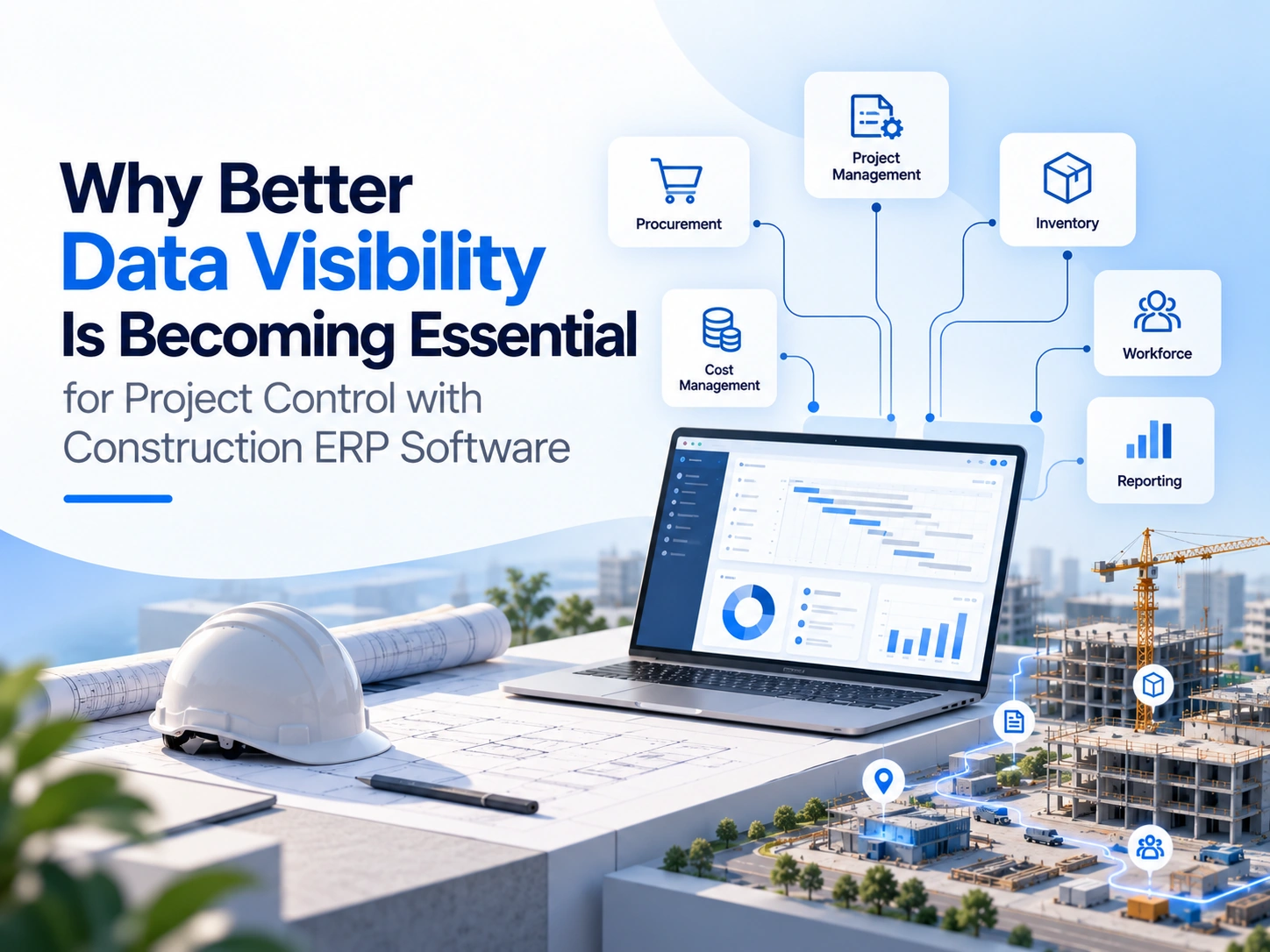
Why Better Data Visibility Is Becoming Essential for Project Control with Construction ERP Software
Construction projects generate a large amount of data every day. Project teams track progress, procurement teams manage materials, finance teams monitor costs, and site managers coordinate labour, resources, and schedules. The challenge is no longer a lack of information. The real challenge is getting the right construction data to the right people at the right time. When information is spread across spreadsheets, emails, messaging applications, and disconnected systems, project teams spend valuable time collecting and reconciling data instead of acting on it. This is where construction ERP software becomes increasingly important. A connected construction ERP system can bring project management, procurement, inventory, workforce, and financial information into one environment, giving teams better construction data visibility and stronger project control. For a broader understanding of how ERP connects construction operations, explore Construction ERP: The Backbone of Efficient Construction Management. What Is Data Visibility in Construction? Construction data visibility means having timely and reliable access to information related to projects, costs, materials, procurement, labour, resources, and progress. For example, a project manager should be able to understand: How much work has been completed What work is still pending Whether project costs are under control Which materials have been ordered or received Whether inventory levels are sufficient How labour is being utilised Which activities are delayed How current performance compares with planned progress With traditional systems, answering these questions may require information from multiple departments. With ERP software for construction companies, these data points can be connected, reducing the need for manual consolidation. This connected approach is particularly important for businesses looking at Construction ERP Software in India as part of their construction technology strategy. Why Construction Companies Struggle With Data Visibility Construction operations are naturally distributed. A single project may involve: Site teams Project managers Procurement teams Stores and inventory teams Finance teams Contractors Vendors Management When every team maintains information separately, data can quickly become fragmented. For example, procurement may have one record of material purchases while the site team maintains another record of material consumption. Finance may use a separate spreadsheet to track project costs. This creates delays and makes construction data management more difficult. A modern construction management ERP helps connect these operational areas so teams can work with more consistent information. Companies exploring the role of ERP in broader business operations can also refer to Construction ERP Software for the Construction Industry. How Construction ERP Software Improves Project Control The main benefit of construction ERP software is not simply replacing spreadsheets. Its larger value is connecting different project activities so management can understand what is happening across the project. 1. Better Construction Project Management Project progress needs to be monitored continuously. A construction project management software solution can help teams track planned activities, actual progress, pending work, and project milestones. When progress information is connected with other project data, managers can identify gaps earlier instead of waiting for periodic reports. This creates better visibility across the project lifecycle. For companies looking at the broader role of ERP in project control, Construction Project Management with ERP provides additional context. 2. Construction Procurement and Inventory Management Materials have a direct impact on project schedules and costs. If required materials are unavailable, work can stop. If materials are over-purchased, working capital can remain unnecessarily tied up in inventory. This is why construction procurement software and construction inventory management software are important components of a connected ERP system. A construction ERP system can help teams connect: Requirement → Purchase → Receipt → Inventory → Consumption This creates better visibility into material movement and supports more controlled procurement decisions. Read more about Construction Inventory and Procurement Management to understand how these processes can be connected. Better material planning can also contribute to stronger construction project cost management, particularly when procurement and inventory data are connected with project requirements. 3. Stronger Construction Cost Management Cost control becomes difficult when project expenses are recorded separately from project progress. A connected construction ERP software platform can bring financial and operational information together, helping teams monitor project costs against planned requirements. This supports: Construction cost management Construction cost control Project cost tracking Budget monitoring Resource cost visibility Variance analysis Better construction project cost management allows project teams to identify potential cost issues earlier and investigate the reason behind them. Companies interested in construction ERP and project cost control can also explore Best ERP Software for Construction. 4. Workforce and Resource Visibility People are another critical project resource. Construction companies need visibility into labour deployment, attendance, workforce requirements, and resource utilisation. A construction workforce management software solution can help organisations maintain better visibility into workforce-related information. When workforce information is connected with project and cost data, managers can understand whether available resources are aligned with project requirements. This contributes to more effective construction resource management. A connected approach to workforce, inventory, project and operational data is one of the key advantages of using a broader construction management ERP. 5. Better Construction Reporting and Dashboards Management teams need more than raw data. They need information that can support decisions. Modern construction reporting software and construction dashboards can bring important project indicators into a single view. Instead of reviewing multiple spreadsheets, management can monitor areas such as: Project progress Cost performance Procurement status Inventory Workforce Pending activities Resource utilisation This improves construction data visibility and makes project reporting more structured. For infrastructure companies managing complex projects, Infrastructure ERP Software in India also provides useful information about connecting project operations through ERP. What Should ERP Software for Construction Companies Provide? When evaluating ERP software for construction companies, businesses should look beyond individual features. A useful construction ERP system should provide connected visibility across important operational areas. Project Management Tracking project activities, milestones, progress, and project information. Procurement Management Managing purchase requirements, purchase orders, vendors, and material procurement. Inventory Management Monitoring material receipts, stock levels, transfers, issues, and consumption. Cost Management Tracking project costs and identifying cost variations. Workforce Management Managing workforce-related information and resource deployment. Reporting and Dashboards Providing dashboards and reports that turn project data into usable information. The goal is to create a connected ERP for construction industry operations rather than another isolated software application. For businesses comparing different solutions, Best ERP Software for Construction Industry can be used as a related resource. Why Construction ERP Software Is Becoming More Important As construction companies manage more projects, locations, vendors, employees, and materials, manually managing information becomes increasingly difficult. This is particularly relevant for companies undergoing construction digital transformation. The objective of digital transformation in construction is not simply to introduce more technology. It is to create better processes, stronger data visibility, and more connected decision-making. For growing companies, construction ERP software India solutions can help bring different operational functions into one structured system. Companies can also explore Construction ERP Software in India: How biCanvas Connects Projects, Inventory, Workforce & Operations for a more detailed look at connected construction operations. How biCanvas Supports Connected Construction Operations biCanvas brings key construction operations together through a connected construction ERP system. It supports areas such as project management, inventory, procurement, workforce, and operational reporting, helping construction companies work with more structured and accessible information. For businesses evaluating the best construction ERP software in India, the focus should be on how effectively the system connects operational information and supports project control. For infrastructure-focused organisations, Infrastructure ERP Software in India can provide a useful perspective on managing complex project operations. Businesses can also learn more about Construction ERP Digital Transformation and how connected systems can support the shift from fragmented processes to structured digital workflows. Conclusion Better data visibility is becoming an important part of modern construction project control. When project progress, procurement, inventory, workforce, and cost information remain disconnected, teams spend more time collecting information and less time acting on it. A connected construction ERP software platform can help create a clearer operational picture by bringing these functions together. For construction companies looking to improve construction project management, construction cost control, procurement, inventory management, workforce management, reporting, and decision-making, a well-connected ERP for construction industry can become an important part of their digital infrastructure. The goal is simple: less fragmented data, better visibility, and more informed project control. Frequently Asked Questions What is construction ERP software? Construction ERP software is an enterprise system designed to connect construction business functions such as project management, procurement, inventory, workforce, finance, and reporting in one platform. Why is ERP important for construction companies? ERP software for construction companies helps connect operational information, reduce fragmented data, improve reporting, and provide better visibility into projects, costs, materials, and resources. What is the difference between construction ERP and construction project management software? Construction project management software generally focuses on project activities and progress. A construction ERP system can connect project management with procurement, inventory, workforce, cost management, and other business operations. How does construction ERP improve cost control? By connecting project and financial information, construction ERP software can provide better visibility into project expenses, planned costs, resource usage, and cost variations. Is construction ERP software useful for growing companies? Yes. As construction companies increase their number of projects, locations, employees, vendors, and materials, a connected ERP system can help organise and centralise operational information.
OUR BLOGS
Our Latest Blogs
31 Aug 2026
By Mohini Dodwade Manufacturing
Manufacturing Inventory Management Software: Connecting Stock to Production
A production line does not stop because a plant ran out of raw material. It stops because nobody knew the raw material was running low until the line was already waiting on it. Most manufacturers can tell you what is sitting in their warehouse on any given day, but far fewer can tell you what that stock actually means for tomorrow's production schedule. That gap between knowing what you have and knowing what it will let you produce is exactly the problem manufacturing inventory management software is built to close. Why Spreadsheet Inventory Breaks Down as Production Scales A small manufacturing operation can often get away with tracking stock in a spreadsheet or a basic accounting tool. The moment a plant runs multiple production lines, multiple shifts, or multiple raw material vendors, that approach falls apart. Stock counts go stale between updates, nobody has a single view of what is committed to a pending work order versus what is genuinely available, and reordering becomes reactive instead of planned. Manufacturing inventory management software exists to remove that lag. It gives a plant a live view of stock as it moves, not a snapshot from the last time someone updated a spreadsheet. What Manufacturing Inventory Management Software Actually Needs to Do For a manufacturer running real production volume, inventory software has to do more than count units sitting in a warehouse. It needs to connect stock directly to what the plant is actually producing. Real-time raw material tracking that updates automatically as material is consumed on the line, not through manual entry after the fact Production-linked stock visibility, so a plant knows exactly how much of a raw material is already committed to open work orders versus genuinely free to allocate Batch and lot tracking for traceability, particularly important for manufacturers who need to trace a finished product back to a specific raw material batch Automated reorder triggers based on actual consumption patterns and lead times, not fixed reorder points that ignore how demand actually moves When these pieces are connected, a plant manager stops reacting to shortages and starts seeing them coming days or weeks in advance. Connecting Inventory to What Happens on the Shop Floor Inventory data on its own is only half the picture. The real value comes from connecting stock levels directly to shop floor activity, so a drop in raw material shows up against the production schedule immediately instead of surfacing as a surprise when a line supervisor goes looking for material that is not there. We cover this connection in detail in our piece on automating the shop floor with ERP, where the core argument is that disconnected systems, not missing processes, are usually what cause manufacturing inefficiency. Manufacturing inventory management software is one half of that connection. Without it feeding directly into production planning, even a well-run shop floor is still operating on incomplete information about what it can actually build next. Where This Differs From MES It is worth being clear about what manufacturing inventory management software is not. A Manufacturing Execution System tracks what is happening on the line in real time, machine status, work-in-progress, and quality checkpoints. Inventory management software tracks the material feeding into and out of that process. Our comparison of manufacturing ERP versus manufacturing execution software breaks down where each system's responsibility starts and ends, and the short version is that inventory and MES need to work together, not compete for the same job. A manufacturer evaluating software should be clear on which gap they are actually trying to close before comparing vendors, since a strong MES with weak inventory visibility still leaves material shortages as a blind spot, and the reverse is equally true. Batch Tracking and Traceability Are Not Optional Anymore For manufacturers supplying regulated industries, or working with clients who require material traceability, batch and lot tracking is not a nice-to-have feature. It needs to be built into the core inventory system, not managed as a separate compliance exercise after production is complete. This matters just as much for manufacturers connected to construction supply chains, where a batch of material needs to be traceable back through the plant to the original raw material lot if a quality issue surfaces on site months later. Manufacturing inventory management software that captures batch data automatically as material moves through production removes the need for manual traceability logs that are easy to fall behind on and difficult to audit later. Where Inventory Fits Into the Broader Supply Chain Manufacturing inventory does not exist in isolation from procurement and logistics. A plant's raw material stock is the downstream result of vendor reliability, delivery timing, and demand forecasting further up the chain. We cover this broader connection in our guide on supply chain management software for construction, and the same principle applies directly to manufacturing: inventory visibility is only as useful as the procurement and logistics data feeding into it. A plant with excellent internal inventory tracking but no visibility into incoming vendor deliveries is still flying blind on the timing side of the equation. What to Evaluate Before Choosing Manufacturing Inventory Management Software Before committing to a platform, check whether it actually connects to production planning or simply counts stock as a standalone function. Confirm whether batch and lot tracking is native to the system rather than a manual add-on process. And check whether reorder logic is based on real consumption patterns and vendor lead times, rather than static reorder points that need constant manual adjustment as demand shifts. How biCanvas Approaches Manufacturing Inventory Management biCanvas connects raw material inventory directly to production planning and work orders, so stock consumption updates automatically as production moves rather than through manual reconciliation at shift end. Batch and lot data is captured as part of the same workflow, giving manufacturers traceability without a separate compliance process running alongside production. Because inventory is tied to the same system managing procurement and vendor data, plant managers get a single view from incoming material to finished output, instead of stitching together answers from separate tools. If your plant is still reconciling stock manually against a production schedule that changes daily, you can book a personalised demo to see how connected inventory tracking works against your own production setup. Frequently Asked Questions Is manufacturing inventory management software the same as an MES? No. An MES tracks real-time activity on the production line itself, while inventory management software tracks the raw material and finished goods stock feeding into and out of that process. They are meant to work together, not replace each other. Does manufacturing inventory management software help with material shortages? Yes, by connecting stock levels directly to production schedules and consumption patterns, it flags potential shortages days or weeks in advance instead of when a line is already waiting on material. Why does batch tracking matter for manufacturers who are not in a regulated industry? Even outside regulated sectors, batch tracking makes it possible to trace a quality issue in a finished product back to its raw material source, which matters for any manufacturer supplying clients who expect accountability if something goes wrong downstream.
OUR BLOGS
Our Latest Blogs
08 Dec 2025
By Mansi Jha Ready Mix Concrete
Best Ready Mix Concrete ERP (RMC ERP) in 2026 — Complete Guide
The Ready-Mix Concrete industry has always operated under pressure — tight timelines, strict mix-design requirements, real-time dispatch coordination, unpredictable delays, rising material costs, and the responsibility of delivering consistent quality to every site. In 2026, the complexity has only increased. Customers expect faster deliveries, tighter quality control, and complete traceability, while RMC companies need better control over batching, logistics, and cost to stay profitable. This is where Ready Mix Concrete ERP (RMC ERP) systems play a crucial role. Unlike generic ERPs, RMC-focused solutions are designed specifically to handle batching, raw material planning, fleet management, delivery scheduling, mix-design control, silo-level inventory, and quality assurance. A modern RMC ERP not only improves operational stability but also reduces wastage, prevents errors, and brings transparency across plants. This guide explores the 10 best Ready-Mix Concrete ERP software solutions in 2026, evaluated on depth, reliability, scalability, and real-world usefulness. Why RMC Businesses Are Moving to ERP in 2026 Managing an RMC business manually is becoming increasingly difficult. Plants run multiple batches per hour, fleets are constantly on the move, mix designs need precision, and customers demand instant updates. Plant operators, dispatch teams, supervisors, and accounts teams often struggle with disconnected systems — spreadsheets, WhatsApp messages, handwritten delivery slips, and offline batching reports. RMC ERP solves these challenges by standardizing mix designs, coordinating dispatch in real time, preventing raw material shortages, reducing billing errors, and providing end-to-end visibility — from batching to delivery. Companies adopting RMC ERP in 2026 are seeing a clear improvement in operational efficiency, faster deliveries, reduced wastage, and better cash flow. How We Selected the Top RMC ERP Solutions Every ERP listed in this article was evaluated based on several core parameters: batching integration capability, material consumption tracking, delivery scheduling and fleet management, quality control depth, multi-plant scalability, financial integration, ease of implementation, mobile accessibility, and overall cost-value ratio. Our goal was to highlight platforms that genuinely understand the realities of RMC operations and deliver measurable improvements. 1. biCanvas ERP — Best Overall RMC ERP for 2026 biCanvas stands out because of how well it connects the entire lifecycle of ready-mix operations. While it is widely used across construction, infrastructure, supply chain, and manufacturing, its workflow depth makes it naturally strong for RMC businesses. It brings batching, materials, dispatch, equipment, and financials under one ecosystem, making it suitable for both single-plant operators and large multi-plant companies. The system offers real-time visibility of plant production, inventory levels, order status, and fleet movement. Its dispatch workflows help reduce delays caused by poor coordination, while built-in financial controls ensure every load is tracked until invoicing. What makes biCanvas particularly effective is how smoothly it handles multi-department connectivity — something many RMC companies struggle with when using fragmented systems. The platform doesn’t feel promotional or pushy; instead, it fits organically into the operational needs most RMC companies already recognize. 2. Inntech RMC ERP — Ideal for Small and Mid-Sized Operators Inntech provides an easy-to-understand interface, basic batching integration, and simple inventory management—making it suitable for companies just transitioning from manual operations. It is affordable, quick to deploy, and handles essential workflows without overwhelming teams. While not as comprehensive as enterprise-grade systems, it meets the needs of smaller plants effectively. 3. ReadyMix ERP (TMS) — Strong for Quality-Driven Environments Companies that prioritize mix-design accuracy and testing often choose ReadyMix ERP. It offers strong QC workflows, batch-wise quality records, automated delivery notes, and compliance documentation. Plants with tight quality requirements benefit greatly from its structured reporting and traceability features. 4. QCRETE ERP — Best for Multi-Location Enterprises QCRETE suits organizations operating several RMC plants across regions. Its central dashboards make it easy for management to monitor material consumption, plant performance, and delivery patterns across units. The system also includes advanced QC features, though it requires a longer implementation period and slightly higher investment. 5. E-ReadyMix ERP — Focused on Dispatch & Delivery Optimization This ERP is favored by companies where delivery timelines are the biggest challenge. The software provides route planning, GPS tracking, and dispatch automation, helping teams reduce delays and manage peak hours more efficiently. Its strength lies more on the logistics side than in deep manufacturing workflows. 6. TRANSFLOW RMC ERP — Best for Fleet-Heavy Operations TRANSFLOW is designed for companies managing large fleets of transit mixers, pump trucks, and material carriers. Its dispatch engine and real-time vehicle tracking allow operations teams to maximize fleet utilization. It performs especially well in high-volume RMC markets where vehicle movement directly affects profitability. 7. ERPNext (Customized for RMC) — Flexible and Cost-Efficient ERPNext is an open-source platform that becomes useful when customized for RMC. It can manage sales orders, batching reports, material usage, and billing, but requires development support to match the depth of purpose-built RMC ERPs. It works best for smaller businesses with budget limitations and simple workflows. 8. ReadyMix360 — Best Lightweight Cloud-Native Option ReadyMix360 is cloud-based, modern, and easy to learn. It fits companies looking for a clean UI and quick deployment. Although feature depth is moderate compared to enterprise-grade platforms, it covers essential workflows effectively. 9. CIMS RMC ERP — Strongest for Quality & Testing Records CIMS is known for its comprehensive QC module. It enables plants to maintain detailed records of slump tests, cube tests, mix variations, and compliance logs. Companies that must follow strict quality documentation standards often prefer this system. 10. Propel RMC Suite — Best for Basic Workflow Digitalization Propel offers straightforward features for batching, invoicing, and material tracking. It is suitable for small plants that need digital structure without extensive automation or high-level analytics. It provides a good starting point for early-stage RMC companies. Choosing the Right RMC ERP Selecting the right ERP depends on plant size, production volume, and operational complexity. For quality-driven plants, QC modules are essential. For businesses focused on timely deliveries, fleet and dispatch optimization are priorities. Multi-plant operations require centralized dashboards and consolidated reporting. Modern RMC operations benefit from connected, mobile-first platforms that reduce errors and streamline operations. Why biCanvas ERP Stands Out Among all RMC ERPs, biCanvas is uniquely positioned. It combines end-to-end operational visibility, mobile-first workflows, financial integration, and plant-to-office connectivity. With biCanvas, managers can track production, fleet, inventory, and costs in real time — without juggling multiple tools. The platform is scalable, cloud-native, and built for growth, making it the preferred choice for RMC companies aiming for efficiency, accuracy, and profitability. Take Action Now If your RMC business is ready to eliminate manual inefficiencies, ensure consistent quality, and gain complete visibility across plants, it’s time to explore the possibilities with biCanvas. Book a demo today and experience how a purpose-built RMC ERP can transform your operations and profitability.
Search
Blog Categories
Recent Posts
Post 01
Why Better Data Visibility Is Becoming Essential for Project Control with Construction ERP Software
31 Oct 2026

Post 02
Infrastructure ERP Software in India: A Project Management Comparison
29 Sep 2026
Post 03
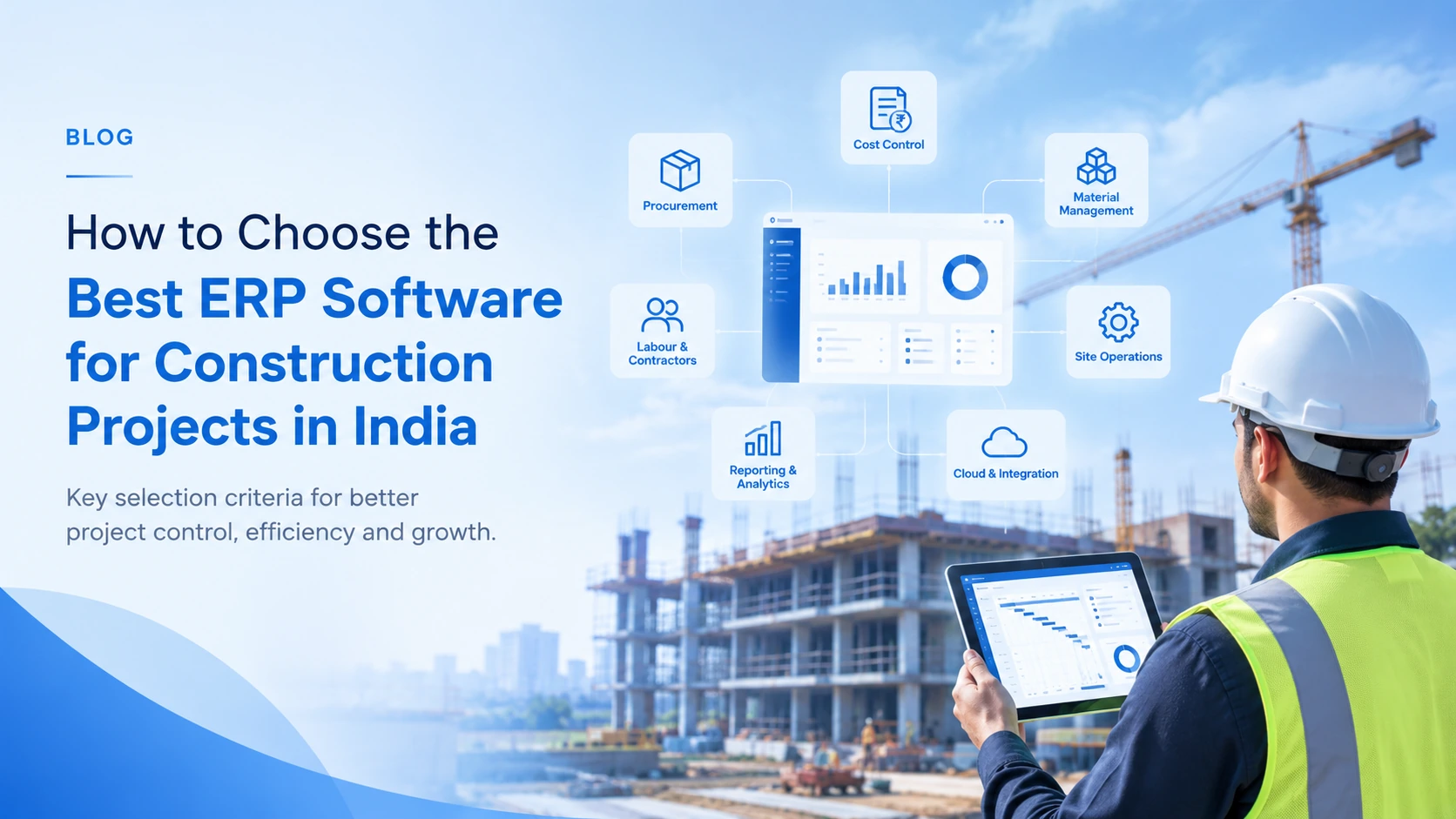
How to choose the best ERP software for construction projects in India - key selection criteria
28 Sep 2026