


 +91-85304 14111




OUR BLOGS
Our Latest Blogs
16 Nov 2026
By Mohini Dodwade l Construction
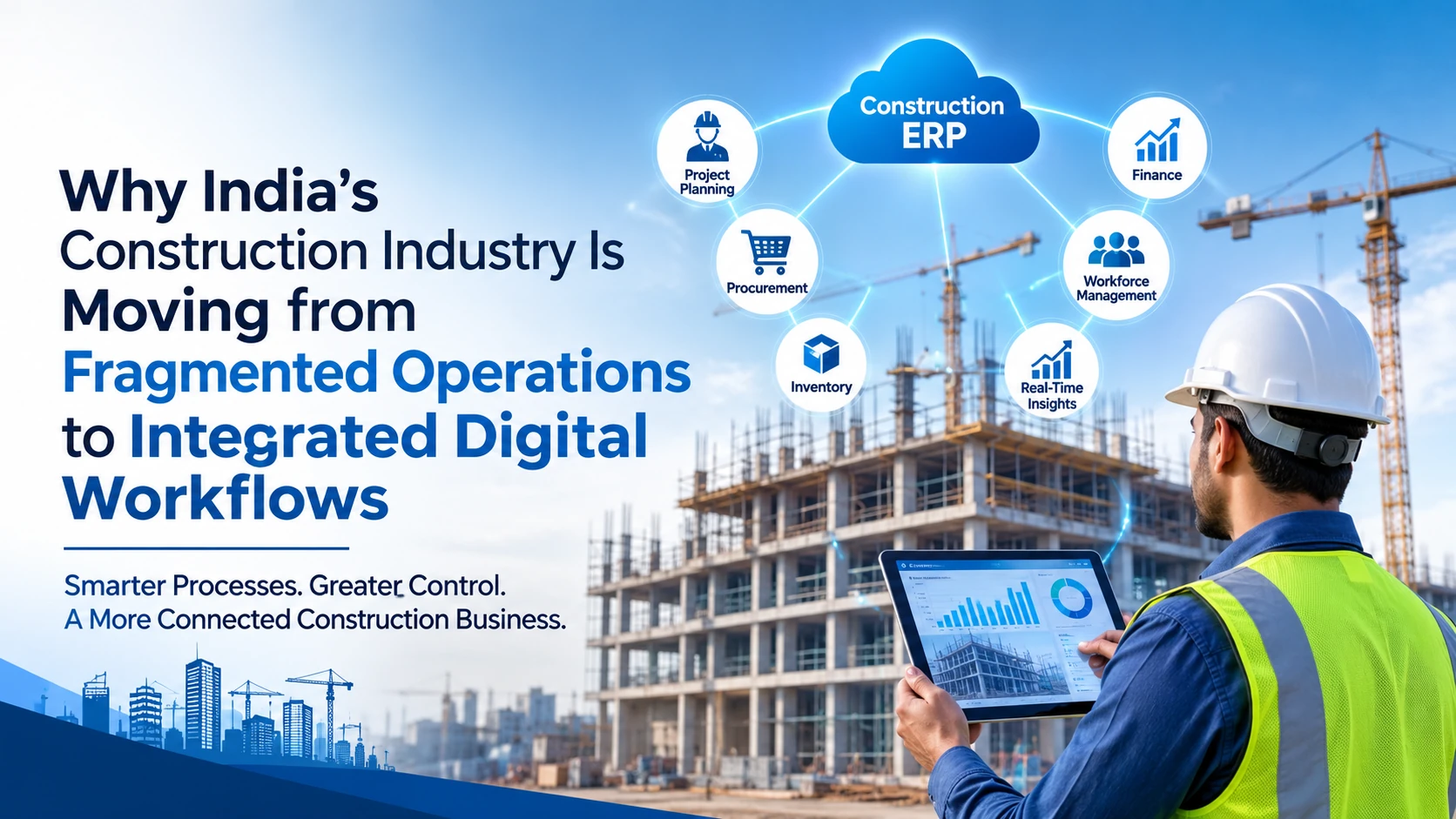
Why India's Construction Industry Is Moving from Fragmented Operations to Integrated Digital Workflows
India's construction industry is undergoing a significant shift towards digital operations. With infrastructure projects becoming larger, project timelines getting tighter and operational costs increasing, construction companies are recognising the importance of managing their business processes through connected digital systems.
However, adopting technology alone does not guarantee better project management. Many construction businesses still depend on spreadsheets, standalone applications, emails and manual reporting to manage different departments. While these tools may work independently, they often create information gaps when project planning, procurement, inventory, finance and site execution need to work together.
According to an August 2026 industry report by Indian Infrastructure, fragmented workflows and legacy processes continue to affect project execution across the sector. The next stage of digital transformation is increasingly focused on connecting information across systems rather than simply introducing more digital tools.
This shift is creating demand for integrated solutions, particularly the best construction ERP software in India, that can connect business operations and provide better visibility across projects.
1. Why Fragmented Operations Are Becoming a Business Challenge
Construction projects involve multiple departments, stakeholders and geographically distributed teams. Each department generates information that directly affects other business functions.
For example, a site engineer identifies a material requirement, the procurement department raises a purchase request, the finance team manages approvals, and the store department records the material receipt.
When these activities operate through disconnected systems, information must be transferred manually between teams.
This can result in:
-
Delayed purchase approvals and material procurement.
-
Inconsistent project cost information.
-
Limited visibility into site-wise inventory.
-
Difficulty tracking actual project progress.
-
Repeated data entry across departments.
-
Delays in preparing management reports.
The problem is not necessarily the absence of technology. It is the lack of coordination between existing systems.
Businesses can understand this challenge further through our guide on Construction ERP Software: The Complete Guide to Choosing the Right ERP for Your Construction Business.
2. Why Integrated Digital Workflows Matter
An integrated digital workflow connects different business activities through a common operational system.
Instead of maintaining separate records for every department, information moves between connected processes, reducing the need for repeated manual updates.
For instance, when a project requirement is approved, it can become the starting point for procurement planning. Once materials are purchased and received, inventory records can be updated. The related costs can then contribute to project-level financial reporting.
This creates a connected operational flow:
Project Planning → Material Requirement → Procurement → Inventory → Site Execution → Cost Tracking → Management Reporting
For construction companies, this approach can improve coordination and make important operational information easier to access.
A well-designed construction management system should therefore connect processes rather than simply provide multiple independent software modules.
3. Five Areas Where Construction Companies Need Connected Workflows
A. Project Planning and Execution
Project planning involves more than preparing schedules and assigning deadlines. Businesses must continuously compare planned activities with actual site progress.
Without connected project information, management may depend on delayed reports to understand project performance.
Construction ERP software can connect project planning, Work Breakdown Structure (WBS), project budgets, daily progress reports and site-level updates.
This allows project managers to monitor activities, identify deviations and review project performance using updated operational information.
Explore how Construction ERP for Project Control supports better project monitoring and execution.
B. Procurement and Inventory Management
Procurement and inventory are closely connected to construction schedules and project costs.
When procurement operates independently from project planning, businesses may experience material shortages, unnecessary purchases or excess inventory.
An integrated workflow connects material requirements, purchase requisitions, vendor quotations, purchase orders, goods receipt notes and stock movements.
This gives procurement and project teams better visibility into material availability and purchasing requirements.
For a deeper understanding, read our guide on Construction Inventory and Procurement Management.
C. Financial Management and Project Cost Control
Project profitability depends on how effectively businesses monitor expenditure throughout execution.
Managing finance separately from project operations can make it difficult to identify where costs are increasing.
An integrated ERP connects project budgets with procurement, material consumption, contractor payments, expenses and billing information.
Management can compare planned budgets with actual expenditure and identify cost variations at the project level.
This makes financial reporting more useful for operational decision-making.
D. Workforce, Contractor and Equipment Management
Construction companies often manage multiple contractors, labour teams and equipment across different locations.
Maintaining separate records for attendance, contractor payments, equipment utilisation and maintenance can create administrative difficulties.
Connected workflows help businesses maintain better visibility into workforce deployment, attendance, contractor activities and equipment allocation.
When these records are linked with project information, management can understand how resources are being utilised across different sites.
E. Management Reporting and Business Intelligence
Management decisions are only as reliable as the information supporting them.
When reports are prepared manually from different departments, leadership may spend considerable time collecting, verifying and consolidating information.
Business Intelligence (BI) dashboards can bring operational information into a common reporting environment.
Management can review project progress, procurement status, inventory movement, financial performance and equipment utilisation without depending entirely on manually prepared reports.
4. What Should Businesses Look for in Construction ERP Software?
Selecting an ERP requires more than comparing the number of available modules.
Construction companies should evaluate whether the software supports their actual business workflows.
Important considerations include:
-
Construction-specific functionality: Project planning, BOQ, WBS, WIP and site execution management.
-
Integrated procurement: Material planning, vendor management, purchase orders and approval workflows.
-
Project-level financial control: Budgeting, expense tracking and planned-versus-actual reporting.
-
Inventory visibility: Site-wise stock, material transfers and consumption tracking.
-
Mobile accessibility: Access to operational information and reporting from project locations.
-
Customisable workflows: Configurable approvals and business processes.
-
Integration capabilities: Connectivity with existing business applications, equipment and operational systems.
-
Scalability: Support for additional projects, locations, users and business requirements.
Companies evaluating the best construction ERP software in India should prioritise workflow compatibility, implementation requirements and long-term operational value rather than selecting software based only on its feature list.
5. How biCanvas Supports Connected Construction Operations
biCanvas, a product of DataDynamx, is an enterprise operating platform designed for construction, infrastructure, ready-mix concrete and manufacturing businesses.
Its Construction ERP solution brings important business functions together within a connected operational environment.
These capabilities include project planning and scheduling, BOQ management, procurement, inventory, contractor management, workforce management, equipment tracking, financial processes and BI dashboards.
The platform also supports configurable workflows, multi-level approvals, mobile accessibility and integration with relevant operational systems.
For construction companies, the objective is to connect activities that traditionally operate in separate departments.
For example, project requirements can be connected with procurement planning, material availability and financial tracking. Similarly, site-level information can contribute to broader project monitoring and management reporting.
Businesses looking for ERP software for the construction industry in India can explore how biCanvas connects projects, inventory, workforce and operational processes.
Conclusion: The Future Belongs to Connected Construction Operations
The construction industry's digital transformation is moving beyond isolated software adoption.
Companies increasingly need systems that connect project execution, procurement, inventory, finance, workforce and management reporting.
Fragmented operations can make coordination difficult as businesses expand across multiple projects and locations. Integrated digital workflows provide a more structured approach to managing information and improving operational visibility.
For organisations evaluating the best construction ERP software in India, the priority should be finding a platform that understands construction-specific requirements and connects everyday business processes.
With its construction-focused capabilities, biCanvas aims to help businesses move towards more connected, organised and measurable operations.
The next competitive advantage in construction will not simply come from using more software. It will come from making existing business processes work together.
OUR BLOGS
Our Latest Blogs
16 Nov 2026
By Mohini Dodwade Construction
Why India's Construction Industry Is Moving from Fragmented Operations to Integrated Digital Workflows
India's construction industry is undergoing a significant shift towards digital operations. With infrastructure projects becoming larger, project timelines getting tighter and operational costs increasing, construction companies are recognising the importance of managing their business processes through connected digital systems. However, adopting technology alone does not guarantee better project management. Many construction businesses still depend on spreadsheets, standalone applications, emails and manual reporting to manage different departments. While these tools may work independently, they often create information gaps when project planning, procurement, inventory, finance and site execution need to work together. According to an August 2026 industry report by Indian Infrastructure, fragmented workflows and legacy processes continue to affect project execution across the sector. The next stage of digital transformation is increasingly focused on connecting information across systems rather than simply introducing more digital tools. This shift is creating demand for integrated solutions, particularly the best construction ERP software in India, that can connect business operations and provide better visibility across projects. 1. Why Fragmented Operations Are Becoming a Business Challenge Construction projects involve multiple departments, stakeholders and geographically distributed teams. Each department generates information that directly affects other business functions. For example, a site engineer identifies a material requirement, the procurement department raises a purchase request, the finance team manages approvals, and the store department records the material receipt. When these activities operate through disconnected systems, information must be transferred manually between teams. This can result in: Delayed purchase approvals and material procurement. Inconsistent project cost information. Limited visibility into site-wise inventory. Difficulty tracking actual project progress. Repeated data entry across departments. Delays in preparing management reports. The problem is not necessarily the absence of technology. It is the lack of coordination between existing systems. Businesses can understand this challenge further through our guide on Construction ERP Software: The Complete Guide to Choosing the Right ERP for Your Construction Business. 2. Why Integrated Digital Workflows Matter An integrated digital workflow connects different business activities through a common operational system. Instead of maintaining separate records for every department, information moves between connected processes, reducing the need for repeated manual updates. For instance, when a project requirement is approved, it can become the starting point for procurement planning. Once materials are purchased and received, inventory records can be updated. The related costs can then contribute to project-level financial reporting. This creates a connected operational flow: Project Planning → Material Requirement → Procurement → Inventory → Site Execution → Cost Tracking → Management Reporting For construction companies, this approach can improve coordination and make important operational information easier to access. A well-designed construction management system should therefore connect processes rather than simply provide multiple independent software modules. 3. Five Areas Where Construction Companies Need Connected Workflows A. Project Planning and Execution Project planning involves more than preparing schedules and assigning deadlines. Businesses must continuously compare planned activities with actual site progress. Without connected project information, management may depend on delayed reports to understand project performance. Construction ERP software can connect project planning, Work Breakdown Structure (WBS), project budgets, daily progress reports and site-level updates. This allows project managers to monitor activities, identify deviations and review project performance using updated operational information. Explore how Construction ERP for Project Control supports better project monitoring and execution. B. Procurement and Inventory Management Procurement and inventory are closely connected to construction schedules and project costs. When procurement operates independently from project planning, businesses may experience material shortages, unnecessary purchases or excess inventory. An integrated workflow connects material requirements, purchase requisitions, vendor quotations, purchase orders, goods receipt notes and stock movements. This gives procurement and project teams better visibility into material availability and purchasing requirements. For a deeper understanding, read our guide on Construction Inventory and Procurement Management. C. Financial Management and Project Cost Control Project profitability depends on how effectively businesses monitor expenditure throughout execution. Managing finance separately from project operations can make it difficult to identify where costs are increasing. An integrated ERP connects project budgets with procurement, material consumption, contractor payments, expenses and billing information. Management can compare planned budgets with actual expenditure and identify cost variations at the project level. This makes financial reporting more useful for operational decision-making. D. Workforce, Contractor and Equipment Management Construction companies often manage multiple contractors, labour teams and equipment across different locations. Maintaining separate records for attendance, contractor payments, equipment utilisation and maintenance can create administrative difficulties. Connected workflows help businesses maintain better visibility into workforce deployment, attendance, contractor activities and equipment allocation. When these records are linked with project information, management can understand how resources are being utilised across different sites. E. Management Reporting and Business Intelligence Management decisions are only as reliable as the information supporting them. When reports are prepared manually from different departments, leadership may spend considerable time collecting, verifying and consolidating information. Business Intelligence (BI) dashboards can bring operational information into a common reporting environment. Management can review project progress, procurement status, inventory movement, financial performance and equipment utilisation without depending entirely on manually prepared reports. 4. What Should Businesses Look for in Construction ERP Software? Selecting an ERP requires more than comparing the number of available modules. Construction companies should evaluate whether the software supports their actual business workflows. Important considerations include: Construction-specific functionality: Project planning, BOQ, WBS, WIP and site execution management. Integrated procurement: Material planning, vendor management, purchase orders and approval workflows. Project-level financial control: Budgeting, expense tracking and planned-versus-actual reporting. Inventory visibility: Site-wise stock, material transfers and consumption tracking. Mobile accessibility: Access to operational information and reporting from project locations. Customisable workflows: Configurable approvals and business processes. Integration capabilities: Connectivity with existing business applications, equipment and operational systems. Scalability: Support for additional projects, locations, users and business requirements. Companies evaluating the best construction ERP software in India should prioritise workflow compatibility, implementation requirements and long-term operational value rather than selecting software based only on its feature list. 5. How biCanvas Supports Connected Construction Operations biCanvas, a product of DataDynamx, is an enterprise operating platform designed for construction, infrastructure, ready-mix concrete and manufacturing businesses. Its Construction ERP solution brings important business functions together within a connected operational environment. These capabilities include project planning and scheduling, BOQ management, procurement, inventory, contractor management, workforce management, equipment tracking, financial processes and BI dashboards. The platform also supports configurable workflows, multi-level approvals, mobile accessibility and integration with relevant operational systems. For construction companies, the objective is to connect activities that traditionally operate in separate departments. For example, project requirements can be connected with procurement planning, material availability and financial tracking. Similarly, site-level information can contribute to broader project monitoring and management reporting. Businesses looking for ERP software for the construction industry in India can explore how biCanvas connects projects, inventory, workforce and operational processes. Conclusion: The Future Belongs to Connected Construction Operations The construction industry's digital transformation is moving beyond isolated software adoption. Companies increasingly need systems that connect project execution, procurement, inventory, finance, workforce and management reporting. Fragmented operations can make coordination difficult as businesses expand across multiple projects and locations. Integrated digital workflows provide a more structured approach to managing information and improving operational visibility. For organisations evaluating the best construction ERP software in India, the priority should be finding a platform that understands construction-specific requirements and connects everyday business processes. With its construction-focused capabilities, biCanvas aims to help businesses move towards more connected, organised and measurable operations. The next competitive advantage in construction will not simply come from using more software. It will come from making existing business processes work together.
OUR BLOGS
Our Latest Blogs
21 Nov 2026
By Mohini Dodwade Infrastructure
AI-Powered Highway Monitoring: How Technology Is Transforming Infrastructure Management in India
India's infrastructure sector is evolving rapidly, with new highways, expressways, bridges and transportation projects expanding across the country. However, infrastructure development is not just about building roads. Maintaining road quality, monitoring assets, managing resources and controlling project costs are equally important. Recent developments in artificial intelligence (AI), drone analytics, laser scanning and digital monitoring systems are changing how highway infrastructure is inspected and maintained. The National Highways Authority of India (NHAI) has been exploring advanced monitoring technologies to improve road condition assessments, identify defects and support maintenance planning. While these technologies improve infrastructure monitoring, construction companies also need efficient systems to manage procurement, inventory, workforce, equipment and project finances. This is where ERP software for construction industry in India plays an important role. India's Shift Towards Digital Highway Monitoring Traditionally, highway inspections have depended on physical surveys, manual reporting and periodic assessments. Monitoring extensive road networks through these methods can be time-consuming. To improve this process, NHAI has demonstrated several digital technologies, including: AI-powered dashcam monitoring. Drone Analytics Monitoring Systems (DAMS). Network Survey Vehicles (NSVs). Falling Weight Deflectometer (FWD) technology. Digital Highway Monitoring Systems. These technologies help identify road defects, assess pavement conditions and improve maintenance planning. AI-powered systems can analyse images to identify potholes, cracks and damaged road infrastructure, while drones provide aerial information about construction sites and surrounding areas. This shift highlights the growing importance of digital infrastructure management in India. 4 Technologies Transforming Highway Infrastructure Management 1. AI-Powered Highway Monitoring AI-powered highway monitoring uses artificial intelligence and computer vision to identify road defects through camera footage and inspection data. It can help detect potholes, damaged barriers, faded road markings, drainage problems and other road safety issues. This allows authorities to identify maintenance requirements more efficiently and maintain better inspection records. 2. Drone-Based Monitoring Drones capture high-resolution aerial images of highways, bridges and construction sites. They help project teams monitor construction progress, identify roadside encroachments and inspect difficult-to-access locations. For infrastructure companies, these insights can improve project visibility and support better site coordination. 3. Network Survey Vehicles and Laser Scanning Network Survey Vehicles use specialised cameras, GPS and scanning equipment to assess road conditions. They help identify pavement cracks, surface roughness, potholes and other forms of deterioration. Engineers can use this information to identify road sections requiring maintenance or rehabilitation. 4. Falling Weight Deflectometer Technology Falling Weight Deflectometer technology evaluates the structural strength of road pavements by measuring their response to a controlled load. It helps engineers identify underlying pavement weaknesses and assess whether strengthening or rehabilitation is required. Together, these technologies are making highway infrastructure management more data-driven. Why Construction Companies Need ERP Software Monitoring infrastructure is only one part of project management. Companies must also coordinate several internal activities to ensure smooth project execution. Large infrastructure projects involve procurement teams, contractors, site engineers, inventory managers, equipment operators and finance departments. When these functions operate independently, businesses may experience material shortages, reporting delays, poor cost visibility and inefficient resource utilisation. The best construction ERP software in India helps businesses manage these functions through a connected platform. Important capabilities include: Project Management: Monitor project progress, schedules, activities and resource allocation. Inventory and Procurement: Track material availability, purchase orders, consumption and supplier information. Equipment Management: Maintain machinery records, equipment allocation and maintenance schedules. Workforce Management: Organise attendance, labour allocation, contractor records and payroll information. Financial Management: Monitor project-wise expenses, budgets and financial performance. Choosing the right construction company software helps organisations improve coordination and maintain better operational control. What Should Companies Look for in the Best Construction ERP Software? Selecting the best ERP software for construction industry requires understanding the company's operational requirements. Businesses should evaluate the following factors: Industry-specific project management features. Procurement and inventory control. Equipment and workforce management. Project-wise financial reporting. Scalability across multiple locations. Integration between departments. The best construction ERP software is not necessarily the one with the most features. It is the solution that addresses actual business challenges and supports long-term operational requirements. For businesses comparing solutions, infrastructure ERP software and project management is an important area to understand before selecting a platform. Construction ERP and Ready-Mix Concrete Management Not all construction businesses have identical requirements. Infrastructure contractors, real estate developers and ready-mix concrete manufacturers follow different operational workflows. For example, an RMC business requires production planning, batching, raw material tracking, dispatch management and delivery records. A specialised ready mix concrete ERP system helps coordinate these activities and maintain better visibility into plant operations. Similarly, infrastructure businesses need project-wise budgeting, procurement planning, inventory management and contractor coordination. Therefore, companies evaluating construction ERP software India solutions should select platforms based on their specific business model. To understand how industrial connectivity supports infrastructure operations, explore our article on PLC and IIoT Integration in Infrastructure Operations. How biCanvas Supports Construction and Infrastructure Businesses As infrastructure projects become more complex, companies need better visibility across their daily operations. biCanvas provides an ERP platform designed to support construction and infrastructure-related business processes. Its capabilities cover project planning, inventory management, workforce attendance and payroll, procurement and financial management. By connecting important operational functions, infrastructure businesses can maintain organised records and improve coordination between departments. Integrated digital processes also help reduce information gaps between teams. Read more about integrated digital workflows in construction. For companies looking for the best ERP software for construction, evaluating actual operational requirements, project complexity and business scalability is essential. The Future of Infrastructure Management in India India's infrastructure sector is moving towards a more technology-driven approach. AI-powered highway monitoring, drone analytics and digital inspection systems are improving how roads and infrastructure assets are assessed. However, technology alone cannot ensure successful project execution. Companies must also manage materials, equipment, workforce, procurement and finances effectively. This makes ERP software for construction industry in India increasingly relevant. At biCanvas, we believe that better infrastructure management begins with organised business operations and connected information. As construction companies continue to adopt digital technologies, integrated ERP systems will play an important role in improving project visibility and operational efficiency. The future of infrastructure will depend not only on how quickly projects are built, but also on how effectively they are managed and maintained. Frequently Asked Questions (FAQs) 1. What is ERP software for construction industry in India? It is a business management solution that helps construction companies manage project planning, procurement, inventory, workforce, equipment and financial operations through an integrated platform. 2. Which is the best construction ERP software in India? The best construction ERP software in India depends on business requirements. Companies should evaluate project management, inventory, procurement, workforce and financial management capabilities before selecting a solution. 3. What is ready mix concrete ERP? Ready mix concrete ERP is a specialised system designed to manage RMC production, batching, raw material consumption, dispatch and delivery operations. 4. Why do infrastructure companies need infrastructure ERP? Infrastructure ERP helps companies manage multiple projects, track materials, coordinate contractors, maintain equipment records and monitor project expenses. 5. What features should the best ERP software for construction include? It should support project planning, procurement, inventory, equipment management, workforce management, financial control and reporting. 6. How does construction company software improve project management? It connects project information, procurement, inventory and financial records, helping teams coordinate activities and make better operational decisions.
OUR BLOGS
Our Latest Blogs
31 Aug 2026
By Mohini Dodwade Manufacturing
Manufacturing Inventory Management Software: Connecting Stock to Production
A production line does not stop because a plant ran out of raw material. It stops because nobody knew the raw material was running low until the line was already waiting on it. Most manufacturers can tell you what is sitting in their warehouse on any given day, but far fewer can tell you what that stock actually means for tomorrow's production schedule. That gap between knowing what you have and knowing what it will let you produce is exactly the problem manufacturing inventory management software is built to close. Why Spreadsheet Inventory Breaks Down as Production Scales A small manufacturing operation can often get away with tracking stock in a spreadsheet or a basic accounting tool. The moment a plant runs multiple production lines, multiple shifts, or multiple raw material vendors, that approach falls apart. Stock counts go stale between updates, nobody has a single view of what is committed to a pending work order versus what is genuinely available, and reordering becomes reactive instead of planned. Manufacturing inventory management software exists to remove that lag. It gives a plant a live view of stock as it moves, not a snapshot from the last time someone updated a spreadsheet. What Manufacturing Inventory Management Software Actually Needs to Do For a manufacturer running real production volume, inventory software has to do more than count units sitting in a warehouse. It needs to connect stock directly to what the plant is actually producing. Real-time raw material tracking that updates automatically as material is consumed on the line, not through manual entry after the fact Production-linked stock visibility, so a plant knows exactly how much of a raw material is already committed to open work orders versus genuinely free to allocate Batch and lot tracking for traceability, particularly important for manufacturers who need to trace a finished product back to a specific raw material batch Automated reorder triggers based on actual consumption patterns and lead times, not fixed reorder points that ignore how demand actually moves When these pieces are connected, a plant manager stops reacting to shortages and starts seeing them coming days or weeks in advance. Connecting Inventory to What Happens on the Shop Floor Inventory data on its own is only half the picture. The real value comes from connecting stock levels directly to shop floor activity, so a drop in raw material shows up against the production schedule immediately instead of surfacing as a surprise when a line supervisor goes looking for material that is not there. We cover this connection in detail in our piece on automating the shop floor with ERP, where the core argument is that disconnected systems, not missing processes, are usually what cause manufacturing inefficiency. Manufacturing inventory management software is one half of that connection. Without it feeding directly into production planning, even a well-run shop floor is still operating on incomplete information about what it can actually build next. Where This Differs From MES It is worth being clear about what manufacturing inventory management software is not. A Manufacturing Execution System tracks what is happening on the line in real time, machine status, work-in-progress, and quality checkpoints. Inventory management software tracks the material feeding into and out of that process. Our comparison of manufacturing ERP versus manufacturing execution software breaks down where each system's responsibility starts and ends, and the short version is that inventory and MES need to work together, not compete for the same job. A manufacturer evaluating software should be clear on which gap they are actually trying to close before comparing vendors, since a strong MES with weak inventory visibility still leaves material shortages as a blind spot, and the reverse is equally true. Batch Tracking and Traceability Are Not Optional Anymore For manufacturers supplying regulated industries, or working with clients who require material traceability, batch and lot tracking is not a nice-to-have feature. It needs to be built into the core inventory system, not managed as a separate compliance exercise after production is complete. This matters just as much for manufacturers connected to construction supply chains, where a batch of material needs to be traceable back through the plant to the original raw material lot if a quality issue surfaces on site months later. Manufacturing inventory management software that captures batch data automatically as material moves through production removes the need for manual traceability logs that are easy to fall behind on and difficult to audit later. Where Inventory Fits Into the Broader Supply Chain Manufacturing inventory does not exist in isolation from procurement and logistics. A plant's raw material stock is the downstream result of vendor reliability, delivery timing, and demand forecasting further up the chain. We cover this broader connection in our guide on supply chain management software for construction, and the same principle applies directly to manufacturing: inventory visibility is only as useful as the procurement and logistics data feeding into it. A plant with excellent internal inventory tracking but no visibility into incoming vendor deliveries is still flying blind on the timing side of the equation. What to Evaluate Before Choosing Manufacturing Inventory Management Software Before committing to a platform, check whether it actually connects to production planning or simply counts stock as a standalone function. Confirm whether batch and lot tracking is native to the system rather than a manual add-on process. And check whether reorder logic is based on real consumption patterns and vendor lead times, rather than static reorder points that need constant manual adjustment as demand shifts. How biCanvas Approaches Manufacturing Inventory Management biCanvas connects raw material inventory directly to production planning and work orders, so stock consumption updates automatically as production moves rather than through manual reconciliation at shift end. Batch and lot data is captured as part of the same workflow, giving manufacturers traceability without a separate compliance process running alongside production. Because inventory is tied to the same system managing procurement and vendor data, plant managers get a single view from incoming material to finished output, instead of stitching together answers from separate tools. If your plant is still reconciling stock manually against a production schedule that changes daily, you can book a personalised demo to see how connected inventory tracking works against your own production setup. Frequently Asked Questions Is manufacturing inventory management software the same as an MES? No. An MES tracks real-time activity on the production line itself, while inventory management software tracks the raw material and finished goods stock feeding into and out of that process. They are meant to work together, not replace each other. Does manufacturing inventory management software help with material shortages? Yes, by connecting stock levels directly to production schedules and consumption patterns, it flags potential shortages days or weeks in advance instead of when a line is already waiting on material. Why does batch tracking matter for manufacturers who are not in a regulated industry? Even outside regulated sectors, batch tracking makes it possible to trace a quality issue in a finished product back to its raw material source, which matters for any manufacturer supplying clients who expect accountability if something goes wrong downstream.
OUR BLOGS
Our Latest Blogs
23 Oct 2026
By Mohini Dodwade Ready Mix Concrete
Ready Mix Concrete ERP: Connecting Production, Inventory and Delivery
Ready Mix Concrete (RMC) businesses operate in a time-sensitive environment where production planning, raw material availability, plant operations, transportation and customer delivery must work together. Even a small disruption in one area can affect several activities across the business. For example, a shortage of cement can delay batching, an unexpected change in a project's concrete requirement can disrupt dispatch schedules, and poor coordination between the plant and transport teams can lead to unnecessary waiting time. These challenges become more difficult when different teams maintain separate spreadsheets, paper records or disconnected applications. This is where ready mix concrete ERP becomes valuable. By connecting key operational activities in one system, an ERP platform can help RMC businesses improve coordination, monitor resources and make decisions using more consistent information. For a broader understanding of how ERP connects construction operations, explore biCanvas's complete guide to construction ERP software. Why Ready Mix Concrete Businesses Need Connected Operations Unlike many other construction materials, ready-mix concrete must be produced and delivered according to specific project requirements and schedules. Production and delivery planning therefore depend on more than the availability of raw materials. RMC businesses must coordinate several activities simultaneously: Monitoring cement, sand, aggregates and admixture availability. Planning production according to confirmed orders and site requirements. Coordinating batching plant operations and equipment. Scheduling vehicles and deliveries. Tracking fuel, transportation and operational costs. Maintaining purchase, inventory and delivery records. When these activities operate independently, teams may have difficulty identifying where delays originate or how operational decisions affect costs. A connected system creates a more consistent flow of information between departments, allowing managers to monitor operations without waiting for multiple teams to compile separate reports. 1. Connect Production Planning with Actual Demand Production planning is one of the most important responsibilities in an RMC business. The plant must produce the required concrete quantity while considering delivery schedules, available resources and customer specifications. Planning production without reliable order information can create two problems: insufficient concrete when a project needs it, or unnecessary production that puts pressure on plant capacity and scheduling. An ERP system can help connect order information, production requirements, material availability and operational schedules. For example, when a construction site requests concrete for a scheduled pour, the operations team can use the available order and planning information to coordinate production and dispatch. If the requirement changes, the relevant teams can review the updated plan rather than relying entirely on separate calls and spreadsheets. The objective is not simply to produce more concrete. It is to align production with actual demand and available capacity. 2. Improve Raw Material Inventory Visibility Cement, aggregates, sand and chemical admixtures are essential inputs for RMC production. Inaccurate inventory records can affect production schedules, purchasing decisions and cost calculations. Manual inventory management often creates a gap between recorded stock and the quantity physically available at the plant. A suitable ERP system can help businesses maintain structured records of material receipts, stock movements, consumption and replenishment requirements. This can support better decisions in several ways: Stock visibility: Review available material quantities before confirming production plans. Purchase planning: Identify replenishment requirements earlier. Consumption monitoring: Compare expected and recorded material usage. Stock reconciliation: Investigate differences between system records and physical quantities. Cost visibility: Connect material movements with operational and financial reporting. These controls are particularly useful when businesses operate multiple plants or supply several construction sites. For more practical insights into material tracking, read biCanvas's guide to construction material management and inventory control. It provides additional context on how material procurement and inventory processes contribute to better construction operations. 3. Coordinate Dispatch and Transportation Production alone does not complete an RMC order. Concrete must reach the right site, in the required quantity, at the appropriate time. Dispatch planning becomes complicated when multiple customers request deliveries within overlapping time windows. Traffic conditions, plant capacity, vehicle availability and changing site requirements can add further pressure. A connected operational system can help teams coordinate dispatch schedules, order details, vehicle allocation and delivery records. For instance, if a site changes its requested delivery time, the operations team needs reliable information to assess the impact on production and other scheduled deliveries. Better coordination can help reduce avoidable waiting, improve communication between the plant and site teams, and make delivery planning more predictable. Businesses should also evaluate whether their chosen platform supports the specific vehicle tracking, weighbridge, batching or transport integrations required by their operations. 4. Monitor Plant, Machinery and Fuel Costs Plant and machinery are important operational resources for RMC businesses. Their availability, maintenance requirements and operating expenses influence productivity. Unexpected equipment downtime can interrupt production and affect delivery commitments. Meanwhile, limited visibility into fuel consumption and maintenance expenditure can make it harder to understand the true cost of operations. An ERP platform with appropriate equipment and asset management capabilities can help businesses maintain equipment records, monitor maintenance activities and track related expenses. Depending on the system configuration, businesses may also integrate equipment or telematics data to analyse utilisation and fuel consumption. The practical benefit is better visibility into recurring operational issues. Managers can identify equipment that requires attention, review maintenance expenditure and evaluate whether resources are being used efficiently. For businesses handling large infrastructure projects, biCanvas also provides insights into construction ERP software for infrastructure businesses, including the importance of evaluating operational requirements before choosing an ERP platform. 5. Connect Plant Operations with Project Requirements RMC suppliers often serve several construction projects with different delivery schedules, concrete grades and quantity requirements. Coordination becomes more demanding when multiple sites depend on the same plant or fleet. This is where construction company software with suitable RMC capabilities can help connect supplier operations with broader construction workflows. A connected system can support coordination between order information, project requirements, dispatch records, material availability and financial reporting. For construction and infrastructure businesses that manage their own RMC operations, this connection can provide a more complete view of how material supply affects project execution. For example, a delayed delivery may affect the site's planned activities. If the relevant teams can access consistent operational information, they can respond sooner and make more informed scheduling decisions. Businesses looking to connect these processes across departments can also explore how biCanvas connects projects, inventory, workforce and operations in India. 6. Improve Cost and Performance Reporting Operational activity generates information about material consumption, production, dispatch, transport and equipment expenses. However, information is useful only when it can be interpreted and connected to business decisions. When reports are prepared manually from separate systems, management may spend considerable time reconciling figures before analysing performance. An integrated ERP environment can help consolidate operational records and provide more structured reporting. Useful performance indicators may include: Planned versus actual production quantities. Raw material consumption and stock variances. Delivery punctuality and vehicle utilisation. Fuel and maintenance expenditure. Plant operating costs. Order fulfilment and outstanding deliveries. The exact indicators depend on the business model, available data and system configuration. Regular reporting helps managers identify recurring bottlenecks, compare performance over time and take corrective action based on evidence rather than assumptions. 7. What Should You Evaluate Before Choosing an RMC ERP? Not every ERP platform supports the operational requirements of a ready-mix concrete business equally well. Before selecting a solution, businesses should evaluate the workflows they need to manage and the integrations required to support them. Consider these questions: Production: Can the system support the production planning and batching workflows your plant requires? Inventory: Can it track raw materials, receipts, consumption and stock reconciliation? Dispatch: Can the team coordinate orders, delivery schedules and dispatch records? Transportation: Does it support the required vehicle, fuel and tracking integrations? Equipment: Can plant machinery, maintenance and operating costs be monitored? Reporting: Can management review operational performance and costs using consistent information? Scalability: Can the system support additional plants, customers and operating locations as the business grows? Implementation: What training, configuration, integration and ongoing support will be required? For a wider evaluation framework, read biCanvas's construction ERP software guide. It explains how connected construction processes can help businesses assess their requirements before choosing a solution. These questions help businesses evaluate software against real operating conditions instead of selecting a product solely because it has an extensive feature list. How biCanvas Supports RMC and Construction Operations biCanvas provides ERP capabilities for construction, infrastructure and ready-mix concrete operations. Its RMC offering covers areas including production planning, material and inventory management, transportation and fuel tracking, plant and machinery management, and purchase management. These capabilities are relevant to businesses seeking better coordination across plant and operational activities. For organisations that also manage construction or infrastructure projects, connecting relevant operational information can help reduce the need to rely on disconnected processes. Explore the biCanvas construction ERP solution to learn more about its project management, finance, inventory, resource allocation and equipment management capabilities. Businesses can also review construction ERP software in India: how biCanvas connects projects, inventory, workforce and operations for a broader understanding of how construction-focused ERP can support connected business processes. The right solution will depend on the organisation's operating model, plant requirements, existing systems and implementation priorities. Conclusion Ready mix concrete operations depend on the coordination of production, raw materials, transportation, equipment and delivery schedules. When these activities are managed through disconnected systems, even routine changes can create delays and make costs harder to understand. A suitable ready mix concrete ERP can help businesses connect operational information, improve inventory visibility, coordinate dispatch and strengthen performance reporting. For RMC suppliers, construction contractors and infrastructure businesses, the goal is to build a reliable flow of information from planning through execution and reporting. biCanvas offers construction and RMC-focused ERP capabilities that businesses can evaluate against these requirements. The best starting point is to identify the operational gaps that affect your business most and determine which workflows need to work together. Frequently Asked Questions 1. What is ready mix concrete ERP? Ready mix concrete ERP is a business management system that helps coordinate RMC activities such as production planning, raw material inventory, dispatch, transportation, equipment management and operational reporting. 2. What are the benefits of using ready mix concrete ERP? Depending on its capabilities and implementation, an RMC ERP can improve inventory visibility, production coordination, dispatch planning, cost monitoring and reporting. It can also help teams work with more consistent operational information. 3. Can construction company software manage RMC operations? Some construction ERP platforms support RMC operations alongside project management, inventory, procurement and finance. Businesses should verify that the chosen platform covers their specific production, batching, dispatch and transport requirements. 4. What is the difference between construction ERP and infrastructure ERP? Construction ERP generally supports project execution, procurement, inventory, budgeting and related business processes. Infrastructure ERP focuses on the requirements of infrastructure projects, which may include multi-site coordination, contracts, resource allocation, equipment and project-level financial control. The capabilities of individual platforms vary. To understand how these requirements affect software selection, read biCanvas's guide to construction ERP for infrastructure businesses. 5. How does biCanvas support ready mix concrete businesses? biCanvas offers RMC-focused capabilities covering production planning, inventory and material management, transportation and fuel tracking, plant and machinery management, and purchasing. Businesses should assess the available configuration and integrations against their operational requirements. 6. How should a business choose the right RMC ERP? Start by mapping current workflows and identifying operational gaps. Then evaluate production planning, inventory controls, dispatch, transportation, equipment management, reporting, integrations, implementation requirements and scalability before making a decision.
Search
Blog Categories
Recent Posts
Post 01
AI-Powered Highway Monitoring: How Technology Is Transforming Infrastructure Management in India
21 Nov 2026
Post 02
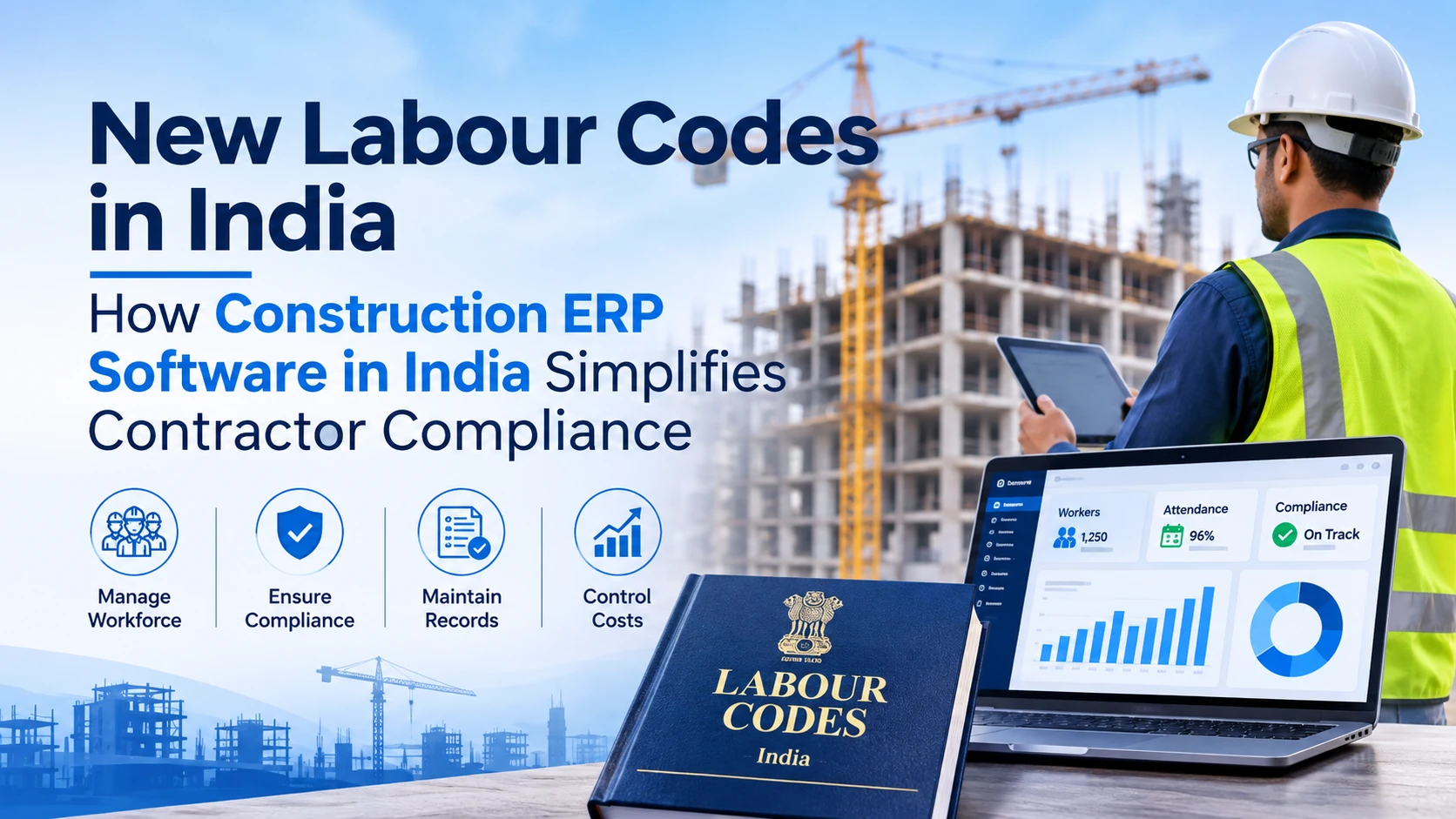
New Labour Codes in India: How Construction ERP Software Simplifies Contractor Compliance
18 Nov 2026
Post 03
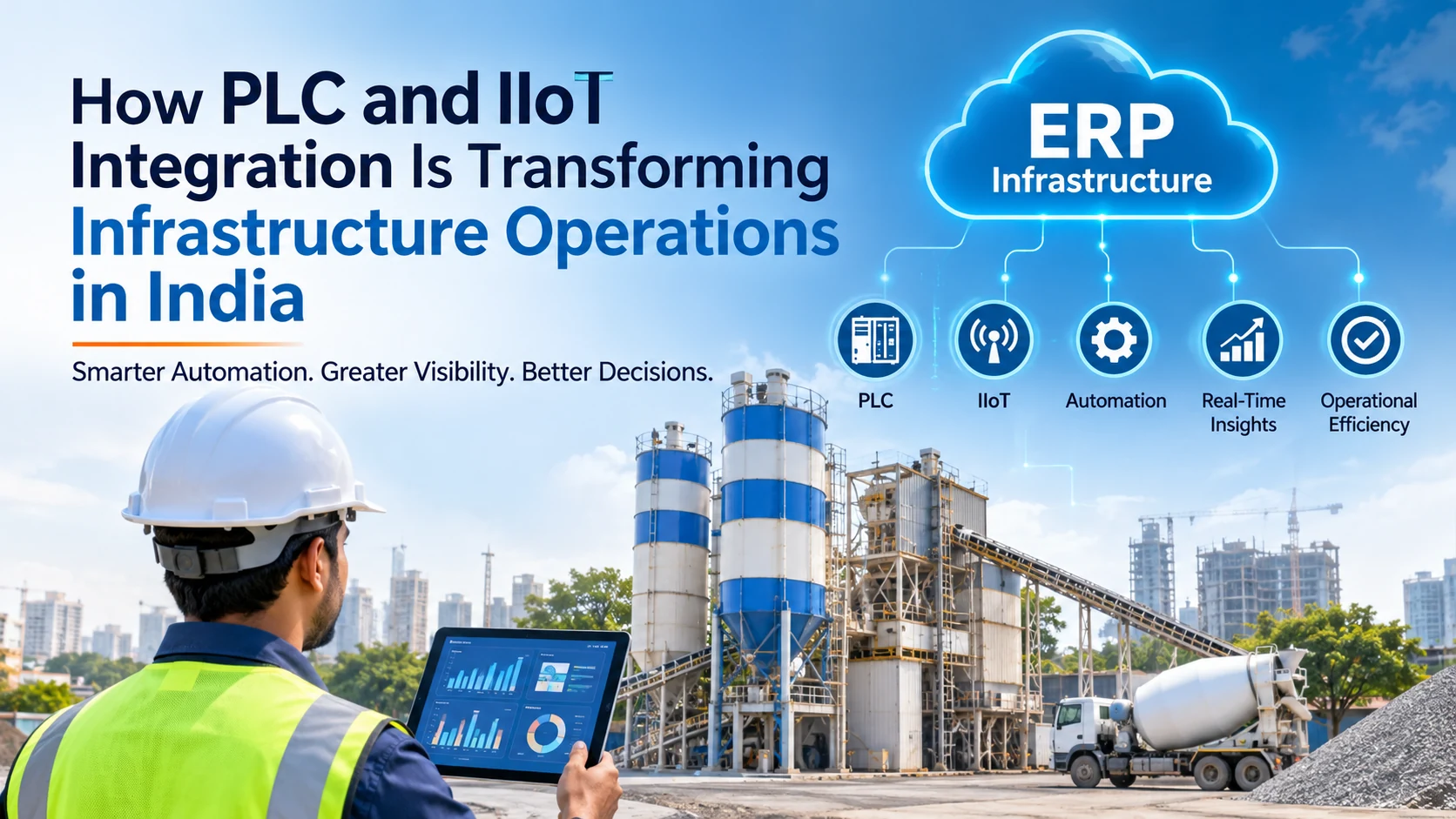
How PLC and IIoT Integration Is Transforming Infrastructure Operations in India
06 Nov 2026