Email:
sales@bicanvas.com
Sales:
Call Icon +91 8530414111
Language Icon
Email: sales@bicanvas.com Sales: +91 8530414111
img img

Blogs

Expert insights, practical advice, helpful tips, and industry-leading best practices
Our Blogs

Our Latest Blogs

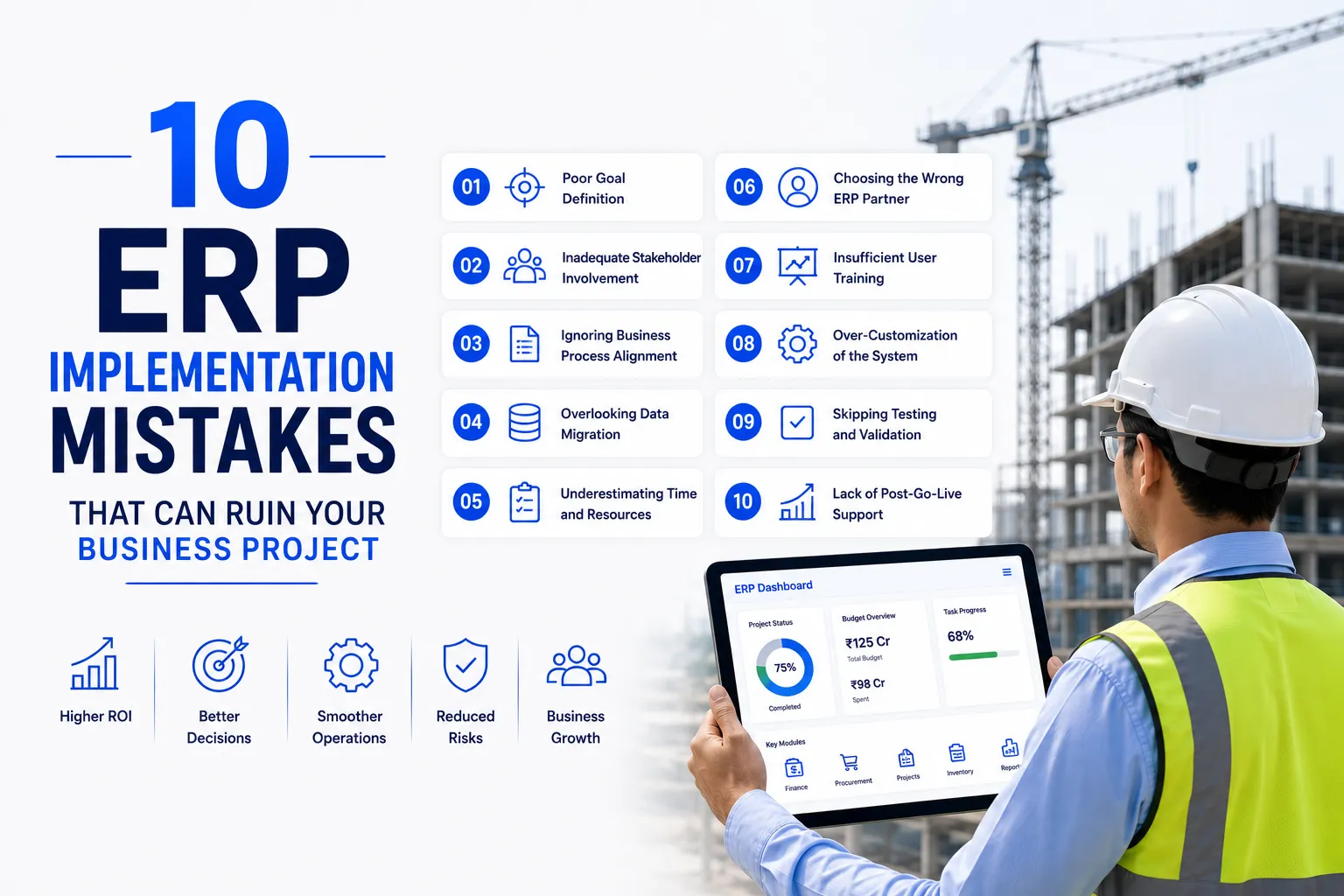
10 ERP Implementation Mistakes That Can Ruin Your Business Project
07 May 2023

10 ERP Implementation Mistakes That Can Ruin Your Business Project

As an ERP system implementation is a big deal for every business, it has its own set of challenges that can either break or make the project. When companies jump headfirst into ERP without knowing about the potential risk, it can lead to catastrophic mistakes. Poor planning, lack of training, or selecting the wrong solution will cause delays and process inefficiencies.

An unsuccessful ERP implementation not only wastes time and money but also impacts the workflow of the business. The bright side is that plenty of those mistakes are preventable with proper strategic planning. In this blog post, we will briefly explain ten absolute must-avoid mistakes that cause ERP failure and how to avoid them for a successful ERP.

Why Do ERP Implementations Fail?

The ERP implementation process is typically organized around three major steps: bringing in the new software, migrating data from earlier systems, and training employees. Failure occurs when businesses are unaware of all the potential risks that can arise during each stage.
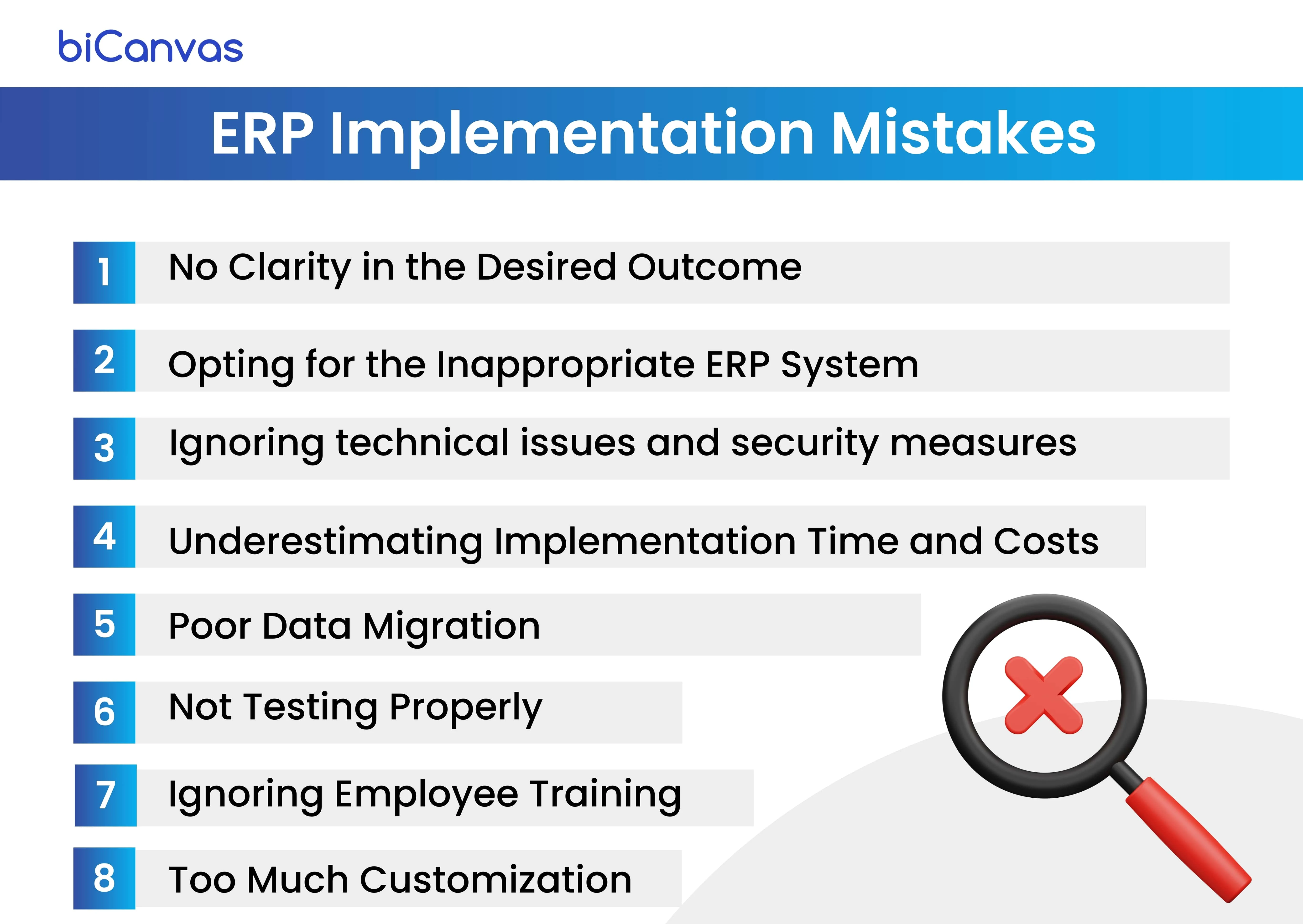
ERP Implementation Mistakes and Solutions

1. No Clarity in the Desired Outcome

Using an ERP system without clear objectives is like traveling without a GPS. Without goals like improved reporting, automation, or cost reduction, it's difficult to track success. Companies may end up with an ERP that doesn’t align with their needs.

How to avoid it: Set clear, measurable goals and ensure the entire team understands them.

2. Opting for the Inappropriate ERP System

Every business has different requirements. Choosing the wrong ERP—one that lacks industry-specific features—can lead to frustration and waste of resources.

How to avoid it: Understand your business needs, get product demos, and select an ERP that aligns with your industry.

3. Ignoring Employee Training

Even the best ERP system will underperform if employees don’t know how to use it. Poor training leads to inefficiencies and poor adoption.

How to avoid it: Offer hands-on training and ongoing support.

4. Poor Data Migration

Data migration errors—like duplicates, missing fields, or wrong entries—can break processes and reporting.

How to avoid it: Audit, clean, and validate your data before migration.

5. Underestimating Implementation Time and Costs

ERP implementation is not quick or cheap. Underbudgeting or unrealistic deadlines often result in rushed work and poor outcomes.

How to avoid it: Set a realistic budget and schedule while preparing for unexpected delays.

6. Absence of Executive Involvement

Lack of leadership can slow down projects and lower employee engagement.

How to avoid it: Involve top-level management from the beginning to promote alignment and momentum.

7. Customizing Too Much

Over-customization makes future updates difficult and can increase long-term costs.

How to avoid it: Use standard ERP features as much as possible. Customize only when absolutely necessary.

8. Not Testing Properly

Skipping proper testing leads to system bugs, poor performance, and data issues at launch.

How to avoid it: Conduct thorough user acceptance testing (UAT) and data validation across scenarios before launch.

9. No Post-Implementation Plan

ERP success doesn’t stop at launch. Businesses often fail by not having a strategy for ongoing evaluation, support, and improvement.

How to avoid it: Plan for long-term monitoring, feedback, and ERP optimization.

10. Ignoring Technical Issues and Security

Poor cybersecurity and unhandled tech glitches can result in data loss or system downtime.

How to avoid it: Regularly audit systems, implement security protocols, and train staff on cybersecurity best practices.

Implement Your ERP With the Help of Our Experts

biCanvas ERP offers complete support during implementation. From online sessions and one-on-one training to 24/5 expert assistance, we help your team understand and utilize ERP efficiently. Our implementation strategy ensures a smooth, scalable transition tailored for your business success.

With proper planning and by avoiding common myths and mistakes, you can set your ERP journey on the path to long-term success. ERP isn't just a system—it's a strategic business transformation tool.

Conclusion

ERP implementation is a considerable step, and while it presents challenges, it offers immense long-term benefits when done right. Avoiding these 10 common mistakes—from poor planning to ignoring security—will ensure your ERP project stays on track and supports your business growth.

Ready to deploy ERP without errors? Discover how biCanvas ERP simplifies implementation and empowers your team. Contact us today for a consultation.
Our Blogs

Our Latest Blogs

/frontend/images/blog/ten-erp-implementation-mistakes-that-can ruin-your-business-project
07 May 2023

10 ERP Implementation Mistakes That Can Ruin Your Business Project

As an ERP system implementation is a big deal for every business, it has its own set of challenges that can either break or make the project. When companies jump headfirst into ERP without knowing about the potential risk, it can lead to catastrophic mistakes. Poor planning, lack of training, or selecting the wrong solution will cause delays and process inefficiencies.

An unsuccessful ERP implementation not only wastes time and money but also impacts the workflow of the business. The bright side is that plenty of those mistakes are preventable with proper strategic planning. In this blog post, we will briefly explain ten absolute must-avoid mistakes that cause ERP failure and how to avoid them for a successful ERP.

Why Do ERP Implementations Fail?

The ERP implementation process is typically organized around three major steps: bringing in the new software, migrating data from earlier systems, and training employees. Failure occurs when businesses are unaware of all the potential risks that can arise during each stage.

ERP Implementation Mistakes and Solutions

1. No Clarity in the Desired Outcome

Using an ERP system without clear objectives is like traveling without a GPS. Without goals like improved reporting, automation, or cost reduction, it's difficult to track success. Companies may end up with an ERP that doesn’t align with their needs.

How to avoid it: Set clear, measurable goals and ensure the entire team understands them.

2. Opting for the Inappropriate ERP System

Every business has different requirements. Choosing the wrong ERP—one that lacks industry-specific features—can lead to frustration and waste of resources.

How to avoid it: Understand your business needs, get product demos, and select an ERP that aligns with your industry.

3. Ignoring Employee Training

Even the best ERP system will underperform if employees don’t know how to use it. Poor training leads to inefficiencies and poor adoption.

How to avoid it: Offer hands-on training and ongoing support.

4. Poor Data Migration

Data migration errors—like duplicates, missing fields, or wrong entries—can break processes and reporting.

How to avoid it: Audit, clean, and validate your data before migration.

5. Underestimating Implementation Time and Costs

ERP implementation is not quick or cheap. Underbudgeting or unrealistic deadlines often result in rushed work and poor outcomes.

How to avoid it: Set a realistic budget and schedule while preparing for unexpected delays.

6. Absence of Executive Involvement

Lack of leadership can slow down projects and lower employee engagement.

How to avoid it: Involve top-level management from the beginning to promote alignment and momentum.

7. Customizing Too Much

Over-customization makes future updates difficult and can increase long-term costs.

How to avoid it: Use standard ERP features as much as possible. Customize only when absolutely necessary.

8. Not Testing Properly

Skipping proper testing leads to system bugs, poor performance, and data issues at launch.

How to avoid it: Conduct thorough user acceptance testing (UAT) and data validation across scenarios before launch.

9. No Post-Implementation Plan

ERP success doesn’t stop at launch. Businesses often fail by not having a strategy for ongoing evaluation, support, and improvement.

How to avoid it: Plan for long-term monitoring, feedback, and ERP optimization.

10. Ignoring Technical Issues and Security

Poor cybersecurity and unhandled tech glitches can result in data loss or system downtime.

How to avoid it: Regularly audit systems, implement security protocols, and train staff on cybersecurity best practices.

Implement Your ERP With the Help of Our Experts

biCanvas ERP offers complete support during implementation. From online sessions and one-on-one training to 24/5 expert assistance, we help your team understand and utilize ERP efficiently. Our implementation strategy ensures a smooth, scalable transition tailored for your business success.

With proper planning and by avoiding common myths and mistakes, you can set your ERP journey on the path to long-term success. ERP isn't just a system—it's a strategic business transformation tool.

Conclusion

ERP implementation is a considerable step, and while it presents challenges, it offers immense long-term benefits when done right. Avoiding these 10 common mistakes—from poor planning to ignoring security—will ensure your ERP project stays on track and supports your business growth.

Ready to deploy ERP without errors? Discover how biCanvas ERP simplifies implementation and empowers your team. Contact us today for a consultation.

OUR BLOGS

Our Latest Blogs

img
30 Dec 2025

Enhance Efficiency: Top Benefits of a VMS Vendor Management System

Understanding the Role of VMS in Business Operations In today's competitive business environment, organizations must effectively manage their vendor relationships to ensure efficient operations and sustained growth. A Vendor Management System (VMS) plays a crucial role in this context, acting as a centralized platform designed to streamline and optimize the management of vendor-related processes. By leveraging a VMS, companies can gain better control over their vendor interactions, ensuring that all engagements are aligned with their strategic goals and compliance requirements. This system helps mitigate risks, reduce costs, and enhance overall operational efficiency. A VMS facilitates seamless communication between businesses and their vendors, providing a structured approach to managing these relationships. It allows companies to maintain a comprehensive database of vendor information, including contract details, performance metrics, and compliance records. This centralized repository ensures that all relevant data is easily accessible, enabling businesses to make informed decisions based on real-time insights. Furthermore, the system's automated workflows and notifications help streamline routine tasks, reducing the administrative burden on procurement and supply chain teams. Moreover, a VMS supports strategic vendor management by offering advanced analytics and reporting capabilities. These tools help organizations identify trends and patterns in vendor performance, allowing them to proactively address potential issues and capitalize on opportunities for improvement. With a VMS, companies can implement performance-based metrics and key performance indicators (KPIs) to continuously monitor and evaluate vendor performance. This data-driven approach enables businesses to build stronger, more collaborative relationships with their vendors, ultimately driving better outcomes for all parties involved. Key Features of an Effective VMS An effective Vendor Management System (VMS) is characterized by a range of features designed to enhance the efficiency and effectiveness of vendor management processes. One of the key features is vendor onboarding, which streamlines the process of integrating new vendors into the organization's ecosystem. This feature typically includes automated workflows for collecting and verifying vendor information, ensuring that all necessary documentation is in place before a vendor can be approved. By simplifying and standardizing the onboarding process, a VMS helps reduce the time and effort required to bring new vendors on board. Another important feature of a VMS is contract management, which enables organizations to create, store, and manage vendor contracts in a centralized repository. This feature ensures that all contract-related information is easily accessible and up-to-date, reducing the risk of miscommunication and contractual disputes. Additionally, a robust contract management module often includes automated alerts and reminders for key contract milestones, such as renewal dates and compliance requirements. This helps organizations stay on top of their contractual obligations and avoid costly penalties or disruptions. Performance management is also a critical feature of an effective VMS. This component allows organizations to track and evaluate vendor performance based on predefined metrics and KPIs. By providing real-time visibility into vendor performance, a VMS enables businesses to identify areas for improvement and take corrective action as needed. Furthermore, performance management tools often include benchmarking capabilities, allowing organizations to compare vendor performance against industry standards and best practices. This helps ensure that vendors are consistently meeting or exceeding expectations, ultimately driving better outcomes for the organization. Benefits of Implementing a VMS Implementing a Vendor Management System (VMS) offers numerous benefits that can significantly enhance an organization's efficiency and overall performance. One of the primary advantages is improved visibility and control over vendor-related processes. With a VMS, companies can centralize all vendor information and activities, making it easier to monitor and manage these relationships. This increased visibility helps organizations identify potential risks and opportunities, enabling them to make more informed decisions and take proactive measures to address any issues that may arise. Another key benefit of a VMS is the ability to streamline and automate routine tasks, reducing the administrative burden on procurement and supply chain teams. By automating processes such as vendor onboarding, contract management, and performance tracking, a VMS frees up valuable time and resources that can be redirected towards more strategic activities. This increased efficiency not only helps reduce operational costs but also enables organizations to respond more quickly to changing market conditions and customer demands. Additionally, a VMS can enhance collaboration and communication between businesses and their vendors. By providing a centralized platform for sharing information and managing interactions, a VMS helps ensure that all parties are on the same page and working towards common goals. This improved communication can lead to stronger, more collaborative relationships with vendors, ultimately driving better outcomes for both the organization and its suppliers. Furthermore, a VMS can support vendor development initiatives, helping businesses identify and address areas for improvement and foster long-term partnerships based on mutual trust and shared success. Cost Savings and Budget Management A Vendor Management System (VMS) can deliver significant cost savings by optimizing vendor-related processes and improving budget management. One of the primary ways a VMS achieves this is by providing greater visibility into spending patterns and vendor performance. With access to real-time data and analytics, organizations can identify areas where they may be overspending or not getting the best value for their money. This information enables businesses to negotiate better terms with their vendors and make more informed decisions about where to allocate their resources. In addition to helping organizations negotiate better deals with their vendors, a VMS can also reduce costs by streamlining and automating procurement processes. By automating routine tasks such as purchase order creation, invoice processing, and payment approvals, a VMS helps eliminate manual errors and reduce the time and effort required to manage these activities. This increased efficiency not only helps lower operational costs but also reduces the risk of costly delays and disruptions. Furthermore, a VMS can help organizations consolidate their vendor base, enabling them to leverage economies of scale and secure more favorable pricing and terms. Effective budget management is another key benefit of implementing a VMS. By providing a centralized platform for tracking and managing vendor-related expenses, a VMS helps organizations maintain better control over their budgets and avoid unexpected costs. The system's reporting and analytics capabilities enable businesses to monitor spending against budget targets, identify trends and patterns, and make data-driven decisions about where to allocate their resources. This increased financial visibility and control can help organizations achieve their budget goals and drive long-term cost savings. Improved Compliance and Risk Management Compliance and risk management are critical aspects of vendor management, and a Vendor Management System (VMS) can significantly enhance an organization's ability to address these challenges. One of the primary ways a VMS improves compliance is by centralizing and standardizing vendor-related processes and documentation. By maintaining a comprehensive database of vendor information, contracts, and compliance records, a VMS ensures that all necessary documentation is easily accessible and up-to-date. This centralized repository helps organizations stay on top of their compliance obligations and reduces the risk of non-compliance. A VMS also supports improved risk management by providing greater visibility into vendor performance and potential risks. The system's analytics and reporting capabilities enable organizations to monitor vendor performance in real-time, identify potential issues, and take corrective action as needed. Additionally, a VMS can help organizations implement risk assessment and mitigation strategies, such as vendor audits and performance reviews. By proactively managing vendor risks, businesses can reduce the likelihood of disruptions and protect their reputation and bottom line. Moreover, a VMS can help organizations stay compliant with industry regulations and standards. Many industries have specific requirements for vendor management, such as data security, labor practices, and environmental sustainability. A VMS can help organizations track and manage these requirements, ensuring that all vendors meet the necessary standards. The system's automated alerts and reminders can also help organizations stay on top of key compliance milestones, such as contract renewals and regulatory audits. This increased compliance visibility and control can help organizations avoid costly penalties and maintain their reputation as a responsible and ethical business. Enhanced Supplier Relationships and Performance A Vendor Management System (VMS) can significantly enhance supplier relationships and performance by providing a centralized platform for managing these interactions. One of the primary ways a VMS achieves this is by facilitating better communication and collaboration between businesses and their vendors. By providing a single point of access for all vendor-related information and activities, a VMS helps ensure that all parties are on the same page and working towards common goals. This improved communication can lead to stronger, more collaborative relationships with vendors, ultimately driving better outcomes for both the organization and its suppliers. Another key benefit of a VMS is its ability to support performance-based vendor management. By providing real-time visibility into vendor performance metrics and key performance indicators (KPIs), a VMS enables organizations to continuously monitor and evaluate vendor performance. This data-driven approach helps businesses identify areas for improvement and take corrective action as needed. Furthermore, performance management tools often include benchmarking capabilities, allowing organizations to compare vendor performance against industry standards and best practices. This helps ensure that vendors are consistently meeting or exceeding expectations, ultimately driving better outcomes for the organization. Additionally, a VMS can support vendor development initiatives, helping businesses identify and address areas for improvement and foster long-term partnerships based on mutual trust and shared success. By providing a centralized platform for managing vendor performance and development activities, a VMS enables organizations to implement targeted improvement plans and track progress over time. This proactive approach to vendor management helps businesses build stronger, more resilient supply chains and drive sustainable growth. Streamlining Procurement Processes Streamlining procurement processes is one of the most significant advantages of implementing a Vendor Management System (VMS). By automating routine tasks and providing a centralized platform for managing procurement activities, a VMS can significantly improve the efficiency and effectiveness of an organization's procurement function. One of the primary ways a VMS achieves this is by automating the purchase order creation and approval process. This not only helps reduce the time and effort required to create and manage purchase orders but also helps eliminate manual errors and ensure that all orders are processed accurately and efficiently. In addition to automating purchase order management, a VMS can also streamline invoice processing and payment approvals. By providing a centralized platform for managing invoices and payments, a VMS helps ensure that all invoices are processed accurately and on time. The system's automated workflows and notifications help reduce the risk of delays and discrepancies, ensuring that vendors are paid promptly and accurately. This increased efficiency can help improve vendor satisfaction and support stronger, more collaborative relationships. Furthermore, a VMS can help organizations optimize their procurement processes by providing greater visibility into spending patterns and vendor performance. The system's reporting and analytics capabilities enable businesses to monitor procurement activities in real-time, identify trends and patterns, and make data-driven decisions about where to allocate their resources. This increased visibility and control can help organizations achieve their procurement goals and drive long-term cost savings and efficiency improvements. Case Studies: Success Stories of VMS Implementation Several organizations have successfully implemented Vendor Management Systems (VMS) to enhance their vendor management processes and achieve significant benefits. One such success story is that of a global technology company that implemented a VMS to streamline its procurement and vendor management activities. By centralizing all vendor-related information and automating routine tasks, the company was able to reduce administrative overhead, improve vendor performance, and achieve significant cost savings. The VMS also provided greater visibility into vendor performance and spending patterns, enabling the company to make more informed decisions and negotiate better terms with its vendors. Another example is a large healthcare organization that implemented a VMS to improve compliance and risk management. The organization faced significant regulatory requirements and needed a solution to ensure that all vendors met the necessary standards. By implementing a VMS, the organization was able to centralize and standardize its vendor management processes, ensuring that all necessary documentation was easily accessible and up-to-date. The VMS also provided real-time visibility into vendor performance and potential risks, enabling the organization to proactively address any issues and maintain compliance with industry regulations. A third success story involves a multinational manufacturing company that implemented a VMS to enhance supplier relationships and performance. The company faced challenges in managing its complex supply chain and needed a solution to improve communication and collaboration with its vendors. By implementing a VMS, the company was able to centralize all vendor-related information and activities, ensuring that all parties were on the same page and working towards common goals. The VMS also provided real-time visibility into vendor performance metrics and KPIs, enabling the company to continuously monitor and evaluate vendor performance and take corrective action as needed. This data-driven approach helped the company build stronger, more collaborative relationships with its vendors and drive better outcomes for all parties involved. Conclusion and Future Trends in Vendor Management Systems As businesses continue to evolve and adapt to changing market conditions, the role of Vendor Management Systems (VMS) will become increasingly important. The benefits of implementing a VMS, including improved visibility and control, streamlined processes, and enhanced supplier relationships, are critical to achieving long-term success and growth. Organizations that invest in a VMS can expect to see significant improvements in efficiency, cost savings, and overall performance. Looking ahead, several trends are likely to shape the future of Vendor Management Systems. One such trend is the increasing use of artificial intelligence (AI) and machine learning (ML) to enhance vendor management processes. These advanced technologies can help organizations analyze vast amounts of data, identify patterns and trends, and make more informed decisions. AI and ML can also support predictive analytics, enabling businesses to anticipate potential issues and take proactive measures to address them. Another emerging trend is the growing emphasis on sustainability and ethical practices in vendor management. As consumers and regulators place increasing importance on environmental and social responsibility, organizations will need to ensure that their vendors meet the necessary standards. A VMS can help businesses track and manage these requirements, ensuring that all vendors adhere to the necessary guidelines and contribute to the organization's sustainability goals. In conclusion, Vendor Management Systems are essential tools for modern businesses looking to enhance their efficiency and achieve long-term success. By investing in a VMS and staying ahead of emerging trends, organizations can optimize their vendor management processes, reduce costs, and build stronger, more collaborative relationships with their suppliers. The future of vendor management is bright, and businesses that embrace these systems will be well-positioned to thrive in an increasingly competitive and dynamic marketplace. Interested in Learning More? Book a Free Demo! Ready to transform your vendor management processes? If you found this information valuable and want to see how a VMS can specifically benefit your organization, we invite you to experience it firsthand. Our team of experts is ready to walk you through a personalized demonstration tailored to your unique business needs. Why Book a Demo? See the system in action with real-world scenarios relevant to your industry Ask questions and get immediate answers from our VMS specialists Discover customization options that align with your specific requirements Understand implementation timelines and best practices Get a clear picture of ROI and how quickly you can start seeing results What to Expect: Our free demo session typically lasts 30-45 minutes and includes a comprehensive overview of key features, live walkthroughs of core functionalities, and an opportunity to discuss your current vendor management challenges and goals. Don't let inefficient vendor management hold your business back. Take the first step toward streamlined operations, better compliance, and stronger supplier relationships. [Book Your Free Demo Today] No obligation. No pressure. Just valuable insights into how a VMS can revolutionize your vendor management strategy.

OUR BLOGS

Our Latest Blogs

img
19 Jul 2025

Streamline Supply Chain Management with a Unified ERP

In today's fast-paced world, dealing with multiple vendors, fluctuating demands, global shipping delays, and growing client expectations makes supply chain and logistics workflows more complex. If you're managing operations with spreadsheets, phone calls, and disconnected systems, it's a recipe for delays, stockouts, or unhappy customers. This is where a unified ERP system makes all the difference. Let’s walk through, in simple terms, how ERP simplifies and streamlines supply chain operations, helps you reduce expenses, avoid chaos, and stay ahead of the competition. What Is a Unified ERP? A unified ERP (Enterprise Resource Planning) system integrates purchasing, inventory, warehousing, production, sales, logistics, and finance into one single platform. You end up with a single source of truth for your entire supply chain instead of juggling four or five disconnected tools. What Happens When You Don’t Use ERP? Many companies still manage their supply chain manually or through fragmented systems. This causes problems like: Outdated inventory data Delayed approvals and miscommunication Missed or duplicate orders No visibility into supplier performance Inaccurate forecasting and stock imbalances If that sounds familiar, it's time to adopt a better solution—ERP. How ERP Streamlines Supply Chain Operations ERP helps manage the entire supply chain in one system, simplifying the ability to monitor orders, inventory, and deliveries. It improves supply chain collaboration and reduces delays by providing real-time updates to all departments. 1. Real-Time Inventory Management ERP automatically tracks inventory across warehouses, locations, and process stages. Benefits: Know exact stock availability in real time Receive alerts before running out or overstocking Auto-update inventory upon goods receipt or shipment No more stock surprises—just a smooth inventory flow. 2. Smarter Procurement Planning ERP helps you plan purchasing based on demand, supplier lead times, and past data. Benefits: Auto-generate POs by assessing stock levels Choose suppliers by price, delivery speed, or past performance Track order status and expected delivery dates This eliminates last-minute purchases and strengthens vendor relationships. 3. Seamless Vendor & Supplier Management ERP centralizes all vendor data, including contacts, contracts, delivery logs, and performance records. Benefits: Compare supplier quotes and turnaround times easily Track delays, rejections, or compliance issues Automate vendor communication and approval workflows Vendor visibility is critical to building resilient supply chains. 4. Demand Forecasting with Data ERP leverages real-time sales and trend data to make accurate predictions about future demand. Benefits: Procure or produce just the right quantity Cut down excess inventory and storage costs Be ready for seasonal spikes or emergency orders Forecasting becomes data-driven—not guesswork. 5. Faster Order Fulfillment Once a sales order is placed, ERP activates workflows across inventory, shipping, and billing. Benefits: Faster delivery from order to dispatch Fewer fulfillment errors All departments work in sync This results in happier customers and repeat business. 6. Unified Dashboard for Decision-Makers ERP gives you live dashboards and analytics to track performance metrics across the supply chain. Benefits: Detect issues early—before they escalate Track KPIs like fulfillment rates, supplier reliability, and cost per order Make quicker, smarter decisions No more waiting for reports—your insights are live. Why It Matters More Than Ever Recent global disruptions—from pandemics to shipping backlogs—have shown us how fragile supply chains can be. Businesses need flexible, data-driven systems to handle changes without breaking down. A unified ERP helps you: React faster to market or supply disruptions Stay productive across distributed teams and locations Scale operations without creating bottlenecks This is more than just software—it’s your strategy for building resilience and growth. Conclusion Trying to manage supply chains manually is like driving blind. It’s slow, risky, and stressful. A unified ERP gives you a clear view of your operations and puts you in control—from sourcing to delivery. If your team is still stuck chasing updates, struggling with inventory errors, or reacting to surprises, it’s time to upgrade. Ready to simplify your supply chain? Discover how biCanvas ERP can give you full visibility and control across sourcing, logistics, inventory, and finance. Book your free demo today!

OUR BLOGS

Our Latest Blogs

img
08 Dec 2025

Best Ready Mix Concrete ERP (RMC ERP) in 2026 — Complete Guide

The Ready-Mix Concrete industry has always operated under pressure — tight timelines, strict mix-design requirements, real-time dispatch coordination, unpredictable delays, rising material costs, and the responsibility of delivering consistent quality to every site. In 2026, the complexity has only increased. Customers expect faster deliveries, tighter quality control, and complete traceability, while RMC companies need better control over batching, logistics, and cost to stay profitable. This is where Ready Mix Concrete ERP (RMC ERP) systems play a crucial role. Unlike generic ERPs, RMC-focused solutions are designed specifically to handle batching, raw material planning, fleet management, delivery scheduling, mix-design control, silo-level inventory, and quality assurance. A modern RMC ERP not only improves operational stability but also reduces wastage, prevents errors, and brings transparency across plants. This guide explores the 10 best Ready-Mix Concrete ERP software solutions in 2026, evaluated on depth, reliability, scalability, and real-world usefulness. Why RMC Businesses Are Moving to ERP in 2026 Managing an RMC business manually is becoming increasingly difficult. Plants run multiple batches per hour, fleets are constantly on the move, mix designs need precision, and customers demand instant updates. Plant operators, dispatch teams, supervisors, and accounts teams often struggle with disconnected systems — spreadsheets, WhatsApp messages, handwritten delivery slips, and offline batching reports. RMC ERP solves these challenges by standardizing mix designs, coordinating dispatch in real time, preventing raw material shortages, reducing billing errors, and providing end-to-end visibility — from batching to delivery. Companies adopting RMC ERP in 2026 are seeing a clear improvement in operational efficiency, faster deliveries, reduced wastage, and better cash flow. How We Selected the Top RMC ERP Solutions Every ERP listed in this article was evaluated based on several core parameters: batching integration capability, material consumption tracking, delivery scheduling and fleet management, quality control depth, multi-plant scalability, financial integration, ease of implementation, mobile accessibility, and overall cost-value ratio. Our goal was to highlight platforms that genuinely understand the realities of RMC operations and deliver measurable improvements. 1. biCanvas ERP — Best Overall RMC ERP for 2026 biCanvas stands out because of how well it connects the entire lifecycle of ready-mix operations. While it is widely used across construction, infrastructure, supply chain, and manufacturing, its workflow depth makes it naturally strong for RMC businesses. It brings batching, materials, dispatch, equipment, and financials under one ecosystem, making it suitable for both single-plant operators and large multi-plant companies. The system offers real-time visibility of plant production, inventory levels, order status, and fleet movement. Its dispatch workflows help reduce delays caused by poor coordination, while built-in financial controls ensure every load is tracked until invoicing. What makes biCanvas particularly effective is how smoothly it handles multi-department connectivity — something many RMC companies struggle with when using fragmented systems. The platform doesn’t feel promotional or pushy; instead, it fits organically into the operational needs most RMC companies already recognize. 2. Inntech RMC ERP — Ideal for Small and Mid-Sized Operators Inntech provides an easy-to-understand interface, basic batching integration, and simple inventory management—making it suitable for companies just transitioning from manual operations. It is affordable, quick to deploy, and handles essential workflows without overwhelming teams. While not as comprehensive as enterprise-grade systems, it meets the needs of smaller plants effectively. 3. ReadyMix ERP (TMS) — Strong for Quality-Driven Environments Companies that prioritize mix-design accuracy and testing often choose ReadyMix ERP. It offers strong QC workflows, batch-wise quality records, automated delivery notes, and compliance documentation. Plants with tight quality requirements benefit greatly from its structured reporting and traceability features. 4. QCRETE ERP — Best for Multi-Location Enterprises QCRETE suits organizations operating several RMC plants across regions. Its central dashboards make it easy for management to monitor material consumption, plant performance, and delivery patterns across units. The system also includes advanced QC features, though it requires a longer implementation period and slightly higher investment. 5. E-ReadyMix ERP — Focused on Dispatch & Delivery Optimization This ERP is favored by companies where delivery timelines are the biggest challenge. The software provides route planning, GPS tracking, and dispatch automation, helping teams reduce delays and manage peak hours more efficiently. Its strength lies more on the logistics side than in deep manufacturing workflows. 6. TRANSFLOW RMC ERP — Best for Fleet-Heavy Operations TRANSFLOW is designed for companies managing large fleets of transit mixers, pump trucks, and material carriers. Its dispatch engine and real-time vehicle tracking allow operations teams to maximize fleet utilization. It performs especially well in high-volume RMC markets where vehicle movement directly affects profitability. 7. ERPNext (Customized for RMC) — Flexible and Cost-Efficient ERPNext is an open-source platform that becomes useful when customized for RMC. It can manage sales orders, batching reports, material usage, and billing, but requires development support to match the depth of purpose-built RMC ERPs. It works best for smaller businesses with budget limitations and simple workflows. 8. ReadyMix360 — Best Lightweight Cloud-Native Option ReadyMix360 is cloud-based, modern, and easy to learn. It fits companies looking for a clean UI and quick deployment. Although feature depth is moderate compared to enterprise-grade platforms, it covers essential workflows effectively. 9. CIMS RMC ERP — Strongest for Quality & Testing Records CIMS is known for its comprehensive QC module. It enables plants to maintain detailed records of slump tests, cube tests, mix variations, and compliance logs. Companies that must follow strict quality documentation standards often prefer this system. 10. Propel RMC Suite — Best for Basic Workflow Digitalization Propel offers straightforward features for batching, invoicing, and material tracking. It is suitable for small plants that need digital structure without extensive automation or high-level analytics. It provides a good starting point for early-stage RMC companies. Choosing the Right RMC ERP Selecting the right ERP depends on plant size, production volume, and operational complexity. For quality-driven plants, QC modules are essential. For businesses focused on timely deliveries, fleet and dispatch optimization are priorities. Multi-plant operations require centralized dashboards and consolidated reporting. Modern RMC operations benefit from connected, mobile-first platforms that reduce errors and streamline operations. Why biCanvas ERP Stands Out Among all RMC ERPs, biCanvas is uniquely positioned. It combines end-to-end operational visibility, mobile-first workflows, financial integration, and plant-to-office connectivity. With biCanvas, managers can track production, fleet, inventory, and costs in real time — without juggling multiple tools. The platform is scalable, cloud-native, and built for growth, making it the preferred choice for RMC companies aiming for efficiency, accuracy, and profitability. Take Action Now If your RMC business is ready to eliminate manual inefficiencies, ensure consistent quality, and gain complete visibility across plants, it’s time to explore the possibilities with biCanvas. Book a demo today and experience how a purpose-built RMC ERP can transform your operations and profitability.

Chat with biCanvas